 Emily’s Blog
- Sunset Beach Tai Chi July 22, 2024
- Coffee with Abu… July 22, 2024
- Rumi Latte in Beverly Hills July 22, 2024
- Judging a Burmese TedTalk July 22, 2024
- Mystical Tajik Cafe in Beverly Hills July 21, 2024
- Hollywood: Brown Film Festival July 21, 2024
- New Play Premiere in Burma July 21, 2024
- Bhutan Meets Malibu & Mulholland July 21, 2024
- Tricycle Bliss July 21, 2024
- Kung Fu Panda July 21, 2024
Category Archives: Blog
Desert Trek…

At work in Sudan (Photo: Emily O'Dell)
Rebellion without truth is like spring in a bleak, arid desert…
— Khalil Gibran
Posted in Blog
Comments Off on Desert Trek…
貝魯特的太極練習課…
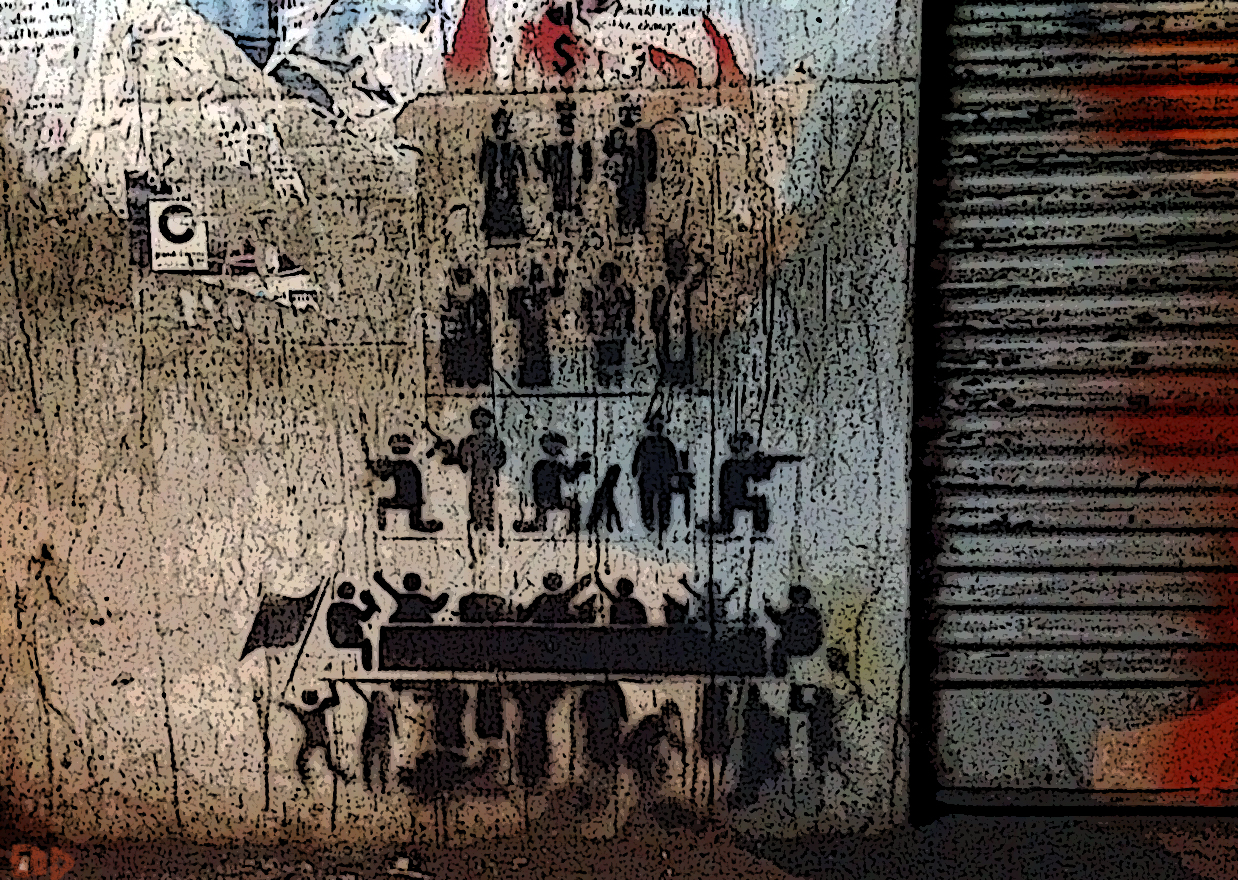
Tonight in Beirut...
Posted in Blog
Comments Off on 貝魯特的太極練習課…
Smoking with Sufis…
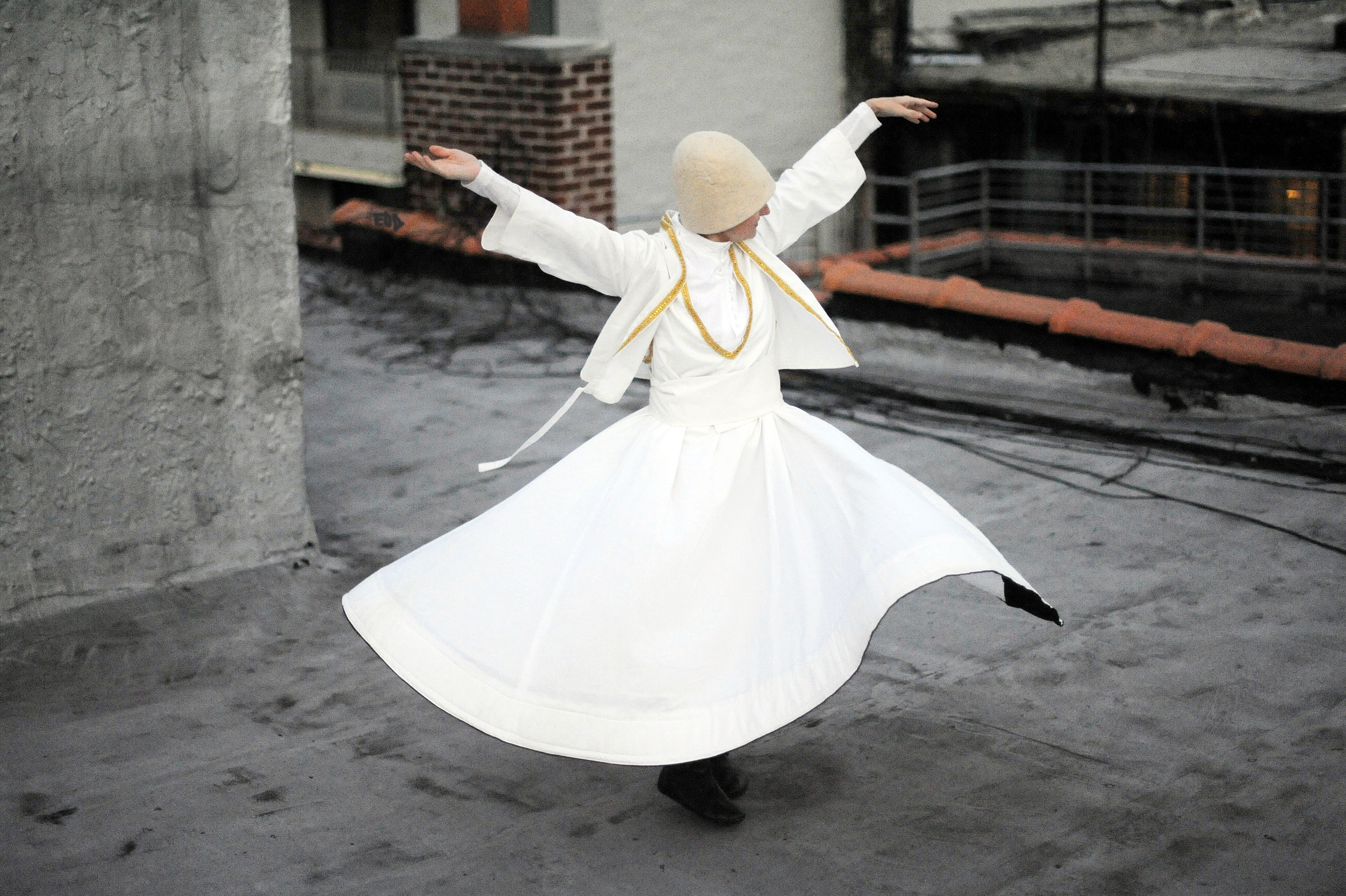
Whirling on my roof (Photo: Emily O'Dell)
Dancing is not habitual rising;
Unless there be pain, you rise like dust.
Dancing is your rising over both worlds,
Tearing your heart, and rising over your soul…
After I whirled with a group of Sufi women today in Beirut, they boiled some Arabic coffee, and dragged out a few water pipes. “Do you want some hubbly bubbly?” one of them asked me. I had to laugh, since I’ve never heard it called that before–I’m more accustomed to its Arabic names. “Isn’t that what they call it in America–a hubbly bubbly?” she said. Since I don’t smoke, I politely refused the offer of a puff–but I was told I was missing out, since the tobacco from Iran was top of the line…
Posted in Blog
Comments Off on Smoking with Sufis…
Love Talk in Beirut…

Saturday in Beirut...
From Minus1: We are back and this time we are bringing you amazing guest speakers to talk about LOVE from different angles: civil marriage, sexual health, selfies and self love, love in occupied lands, love of food, and more! The second collective exhibition will reveal works that will make you fall in love with the world all over again! Watch this space for announcement of guest speakers and artists throughout the week!
Posted in Blog
Comments Off on Love Talk in Beirut…
All You Need is Love…

Tomorrow in Beirut...
To purchase tickets online, please click here–or e-mail: events@aub.edu.lb.
Posted in Blog
Comments Off on All You Need is Love…
Mohsen Namjoo…
Though he’s been described by the NYTimes and NPR as the “Bob Dylan of Iran” (for his nuanced wordplay and message of reform), singer Mohsen Namjoo defies any and all labels. On his website, he describes himself as an “Iranian artist, songwriter, singer, music scholar and setar (traditional Persian lute) player”–based in California, but born in Iran. His music is a dynamic fusion of Sufi poetry (by Rumi, Saadi and Hafiz), rock, jazz, and blues…
Posted in Blog
Comments Off on Mohsen Namjoo…
A Simulation?
In science fiction, stories about simulated realities are commonplace. Writers and filmmakers delight in the chance to rattle our notions of reality and perception. Even Kurt Vonnegut toyed with the idea in his novel, Breakfast of Champions. But to Nick Bostrom, a philosopher and co-founder of the World Transhumanist Association, simulated realities are more than just a provocative thought experiment. In fact, he believes it is more than likely that we are all part of one right now.
Today in Beirut, my students and I turned our attention to a recent NYTimes Op-Ed to consider whether the universe is a computer simulation. After discussing how this digital paradigm might relate to Plato and Aristotle, we wondered if the realization that we live in a SIMS Beirut would make any difference in our every day lives. The consensus–it wouldn’t make any difference at all.
In these three videos, the notion of “simulation” is explored in depth by philosophers, scientists, and mechanical engineers. Some questions considered are: is the computation constructing our “reality” taking place here or somewhere else–and can we in this particular simulation prove there are other simulations running at the same time? Recent films like Her and The Hunger Games: Catching Fire (in the tradition of many films before them) also explore the possibilities and perils of a digitized “universe.” If the universe is a computer, one of the scientists wonders in the video below, then why doesn’t it crash?
Living in the Matrix?
As computers become progressively faster and more powerful, they’ve gained the impressive capacity to simulate increasingly realistic environments. Which raises a question familiar to aficionados of The Matrix—might life and the world as we know it be a simulation on a super advanced computer? “Digital physicists” have developed this idea well beyond the sci-fi possibilities, suggesting a new scientific paradigm in which computation is not just a tool for approximating reality, but is also the basis of reality itself. In place of elementary particles, think bits; in place of fundamental laws of physics, think computer algorithms. But is this a viable approach? Is the universe the ultimate computer running some grand cosmic code? A discussion among the brightest minds in digital physics to explore math, computer science, theories of consciousness, the origin of life, and free will—and delve into a world of information that may underlie everything.
Who is the programmer, and where is the computer?
If everything we know as reality is simply a computer program being run by some complicated set of cosmic algorithms, then where’s the computer and who’s the programmer? Although it is difficult to imagine a machine that can simulate an entire universe down to the subatomic level, as pioneering computer scientist Edward Fredkin explains, a computer can create representations of space with completely different laws governing them. He believes the same could apply outside our known universe.
For more science talks and blurbs like these, please click here.
Posted in Blog
Comments Off on A Simulation?
A Matter of Time…
The question of “time”–which my students and I have been contemplating this week in the writings of Augustine, Beckett, and Donne–is addressed by a panel of philosophers and scientists in the World Science Festival video above.
The nature of time is an age-old conundrum for physicists, philosophers, biologists and theologians. The Newtonian picture of time—a kind of cosmic clock that ticks off time in a manner that applies identically to everyone and everything—tightly aligns with our experience. But with special and general relativity, Einstein showed the fallacy inherent in experience: the rate at which time elapses depends on circumstance and environment. These discoveries raise even more basic, long-standing puzzles: What is time? Is it a fundamental feature of reality or something we humans impose on experience? Does time come into existence with the universe or does it transcend it? Why does time exist at all?
Posted in Blog
Comments Off on A Matter of Time…
Protest, Police, & Rights: When Good Protests Go Bad…
Protest, Police, and Rights: When Good Protests Go Bad
Monday, February 24, 2014; 7:15 pm
Columbia University
World Room, Journalism School
Next week, the Harriman Institute and the Columbia Journalism School will be hosting a panel discussion featuring the 2014 Paul Klebnikov Russian Civil Society Fellow, Olesya Gerasimenko of Kommersant.
Panelists:
Timothy Frye, Director, Harriman Institute and Marshall D. Shulman Professor of Post-Soviet Foreign Policy
Olesya Gerasimenko, 2014 Paul Klebnikov Russian Civil Society Fellow
Todd Gitlin, Professor of Journalism and Sociology at Columbia Journalism School
Oxana Shevel, Associate Professor of Political Science at Tufts University
Moderated by Ann Cooper, CBS Professor of Professional Practice in International Journalism at Columbia Journalism School.
Protesters in the streets of Cairo and Kiev, Moscow and New York have brought new attention to the ancient clash between the rights to free speech and physical security. This tension not only raises philosophical questions of right and wrong; it also begs for a discussion of the best policy responses. Why do some protests turn violent? When does violence help and hurt the cause of the protesters? What can protesters, politicians, and police do to recognize different points of view on contentious issues, while also ensuring social order?
Posted in Blog
Comments Off on Protest, Police, & Rights: When Good Protests Go Bad…
El maestro Sufi en la librería…
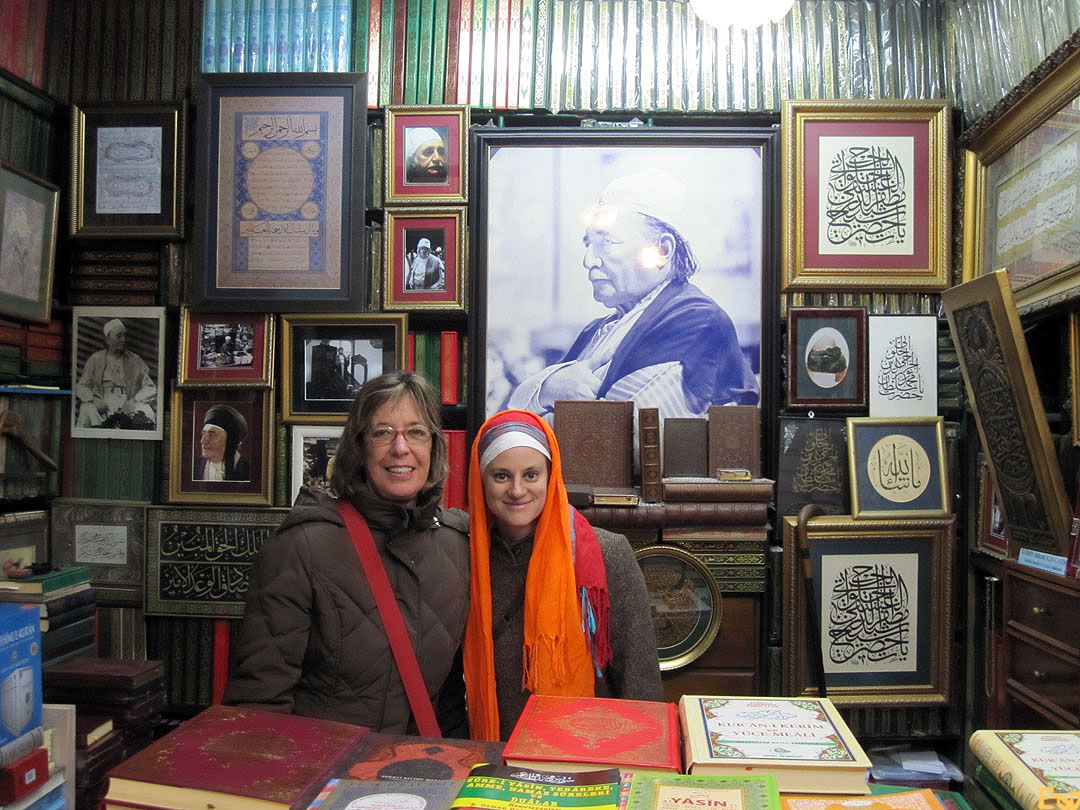
El maestro Sufi en la librería (Photo: Emily O'Dell)

Visiting his tomb in Istanbul
La filosofía está acabada. Ahora es tiempo del amor.
— Shêij Muzaffer Ashki al-Jerrahi
En un artículo sobre Estambul publicado recientemente por el NYTimes, el premio Nobel de literatura, Orhan Pamuk menciona su cariño por un bazar de libros turco –a donde yo siempre llevo a mis amigos (aunque no por los libros).
Comparto aquí un extracto del artículo: “Nadie estaría aquí en sábado. Yo estaría regateando, hablando, platicando. Conocería a todos los dependientes de los puestos, pero eso ha cambiado ahora”. Él (Pamuk) dijo, refiriéndose a la creciente atmósfera turística y la desaparición de personajes que llegó a conocer, como un vendedor de manuscritos que ejercía también como predicador Sufi. Ahora, dijo, “sólo vengo una vez al año”.
Si no me equivoco, diría que se refiere al Shêij Muzaffer Ashki al-Jerrahi, un maestro Sufi de la orden Halveti-Jerrahi, quien acostumbraba vender manuscritos en una librería de la esquina del bazar (y que además escribió varios libros). Cada vez que encuentro a algún amigo en Estambúl, lo llevo a la librería en donde el Shêij Muzaffer trabajó –para ver las fotografías y caligrafías colgadas en su memoria a modo de santuario escondido.
Aunque el Shêij Muzaffer (Muzaffer Effendi) era un amado predicador Sufi en Estambul, él fue el responsable de traer a occidente a la orden Halveti-Jerrahi – fundada por Hadrat Mir Nureddin al-Jerrahi (b.1678)- a fines del Siglo XX por medio de sus viajes, enseñanzas y viviendo en Estados Unidos. Hoy, la orden Sufi Halveti-Jerrahi y la orden sufí Nur Ashki Jerrahi (liderada por Shêija Fáriha) transmiten su legado y enseñanzas.
Shêij Muzaffer murió en 1985 y fue enterrado en Estambul en la tekke sufí en la que se reúnen cada semana los derviches para girar y realizar la ceremonia de alabanza dhikr, como la que lidera Shêij Muzaffer en el video a continuación…
Los shêijs son los recipientes del vino y el derviche es el vaso. El amor es el vino. Por la mano del recipiente, el vaso –el derviche- se llena. Este es el camino corto.
El amor puede ser ofrecido a uno por otras manos. Este es el camino corto.
— Shêij Muzaffer Ashki al-Jerrahi
Hoy, 15 de febrero, es el aniversario de la procesión funeral por Estambul del Shêij Muzaffer (como se ve en el video de abajo). Aunque era un día de helada, miles de derviches vinieron a seguir su ataúd y asistir a las oraciones funerales que se llevaron a cabo en la Mezquita Fatih, antes de llevar su cuerpo de vuelta a la tekke. Por 40 días fue recitado continuamente “la ilaha illa-llah” en su tumba, al igual que versos del Quran y los 99 nombres divinos.
Luego de 40 días, un nuevo maestro, Sefer Effendy, fue electo para continuar el liderazgo de la orden Halveti Jerrahi, acompañado por la memoria de Muzaffer…
El amor y el amante no tienen una doctrina rígida. Hacia cualquier dirección que el amante va, se voltea hacia su amado. En donde sea que está, él está con su amado. A donde sea que vaya, va con su amado. Él no puede hacer nada, no puede sobrevivir siquiera por un momento sin su amado. Constantemente recuerda a su amado, y su amado lo recuerda. Amante y amado, recordando y recordando, están siempre en la compañía del otro, siempre juntos…
— Shêij Muzaffer Ashki al-Jerrahi
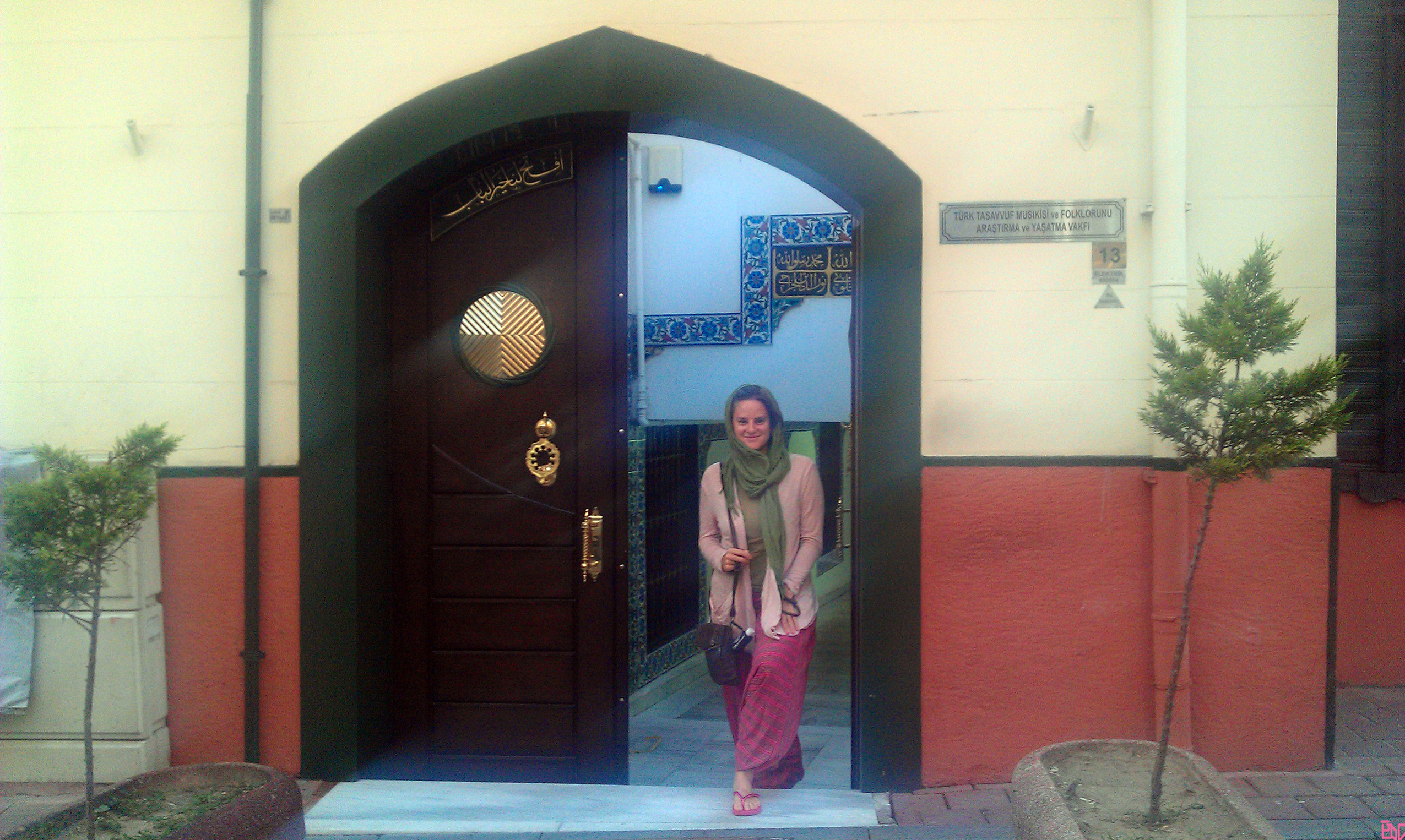
Saliendo de la tumba de Shêij Muzaffer (Foto: Emily O’Dell)
Posted in Blog
Comments Off on El maestro Sufi en la librería…
Fall-out…

Tonight in Beirut (Photo: Emily O'Dell)
Posted in Blog
Comments Off on Fall-out…
Today in Beirut…
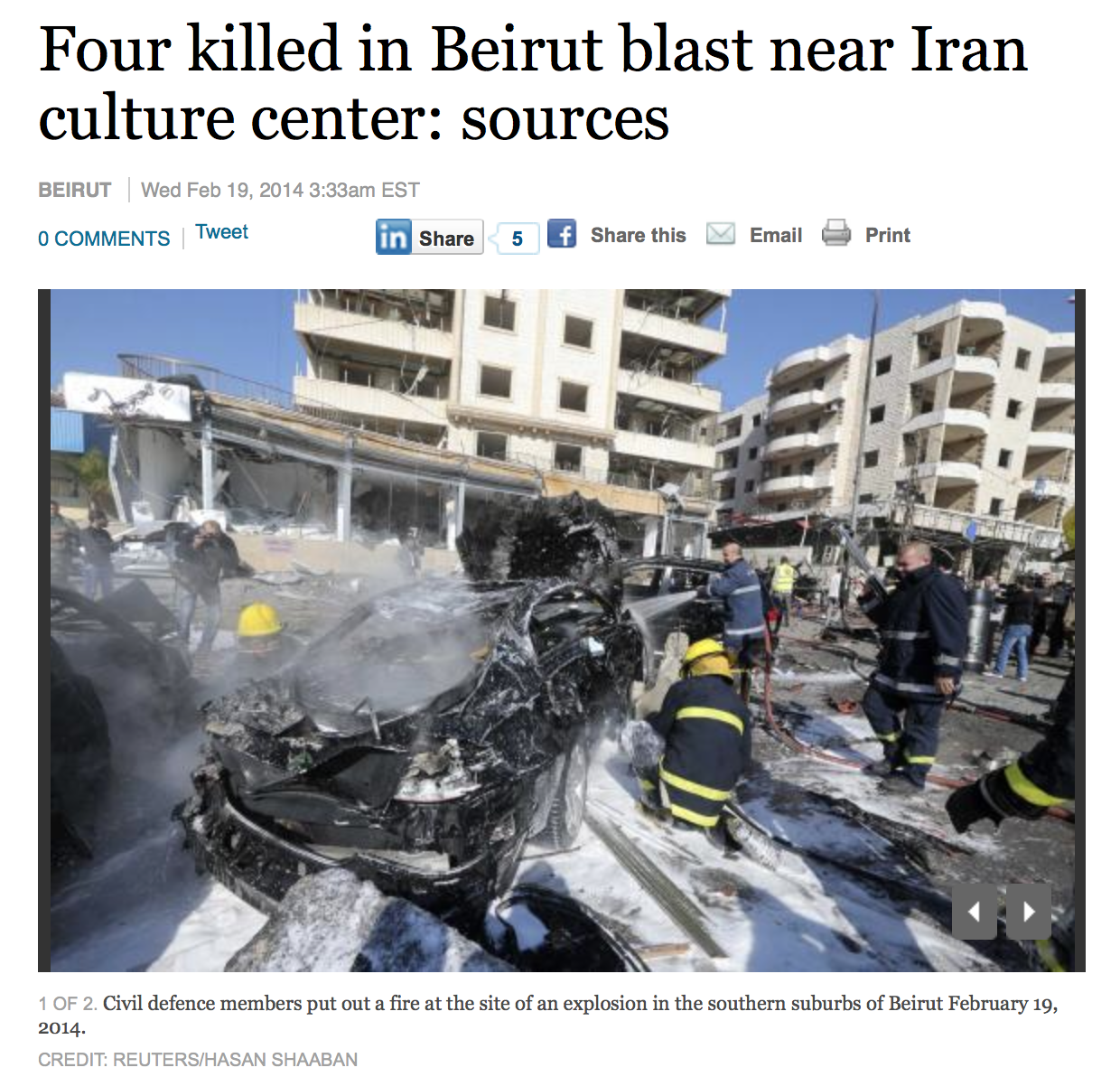
Today in Beirut
Outside of the store, a man took out his cell phone to show me photos from the explosion–including one with the mangled flesh of a suicide bomber–lying on the street like a raw piece of meat. A few minutes later, the Abdallah Azzam Brigades claimed responsibility on Twitter for the attack. In a cafe where I’m now sitting to catch up on the news, many people around me are asking–is this just business as usual, or is Beirut really on the brink?
Posted in Blog
Comments Off on Today in Beirut…
Waiting…
I think there has been a failure of conscience on the part of writers and intellectuals in the Western world.
— Susan Sontag
Yesterday, I wrote a post on “time” in “Waiting for Godot” by Samuel Beckett–since Beckett’s been on my mind, while I’ve been reading Augustine. To my surprise, I woke up this morning to a NYTimes Op-Ed about the 1993 performance of “Waiting for Godot” in Sarajevo–a production which was overseen by Susan Sontag. In these two videos, Sontag discusses her involvement in the Sarajevo production, and her activism abroad. Naturally, “Waiting for Godot” lends itself to being performed in situations and spaces with no exit. One of my favorite performances of “Waiting for Godot” would have to be the historic production of the play at San Quentin Prison. It’s not hard to imagine a production of “Waiting for Godot” being staged sometime soon in or near Syria…
Posted in Blog
Comments Off on Waiting…