 Emily’s Blog
- Sunset Beach Tai Chi July 22, 2024
- Coffee with Abu… July 22, 2024
- Rumi Latte in Beverly Hills July 22, 2024
- Judging a Burmese TedTalk July 22, 2024
- Mystical Tajik Cafe in Beverly Hills July 21, 2024
- Hollywood: Brown Film Festival July 21, 2024
- New Play Premiere in Burma July 21, 2024
- Bhutan Meets Malibu & Mulholland July 21, 2024
- Tricycle Bliss July 21, 2024
- Kung Fu Panda July 21, 2024
Category Archives: Blog
Syrian Refugees in Beirut…
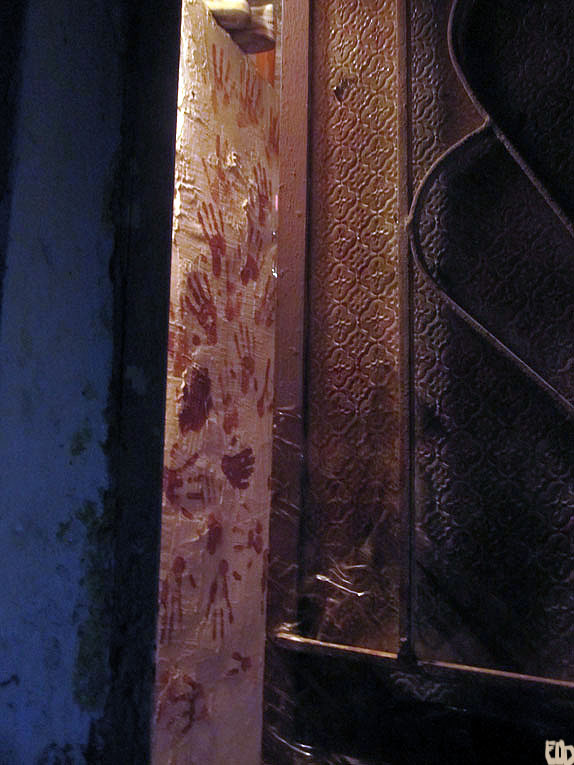
Sabra Refugee Camp in Beirut (Photo by EOD)
Wherever I am–be it walking to class or running an errand–I bump into Syrian children on the street–who tug at my shirt, and beg me for money or a meal. When I’m visiting the refugee camps, I can’t help but shake my head in disbelief when seeing the horrible conditions under which many of the refugees live–sometimes with nine people to just one room. Those who are fortunate enough to be able to afford an apartment have filled any vacancies in my neighborhood and others nearby–pricing out many students and new refugee arrivals who are forced to find apartments in other crowded sections of the city.
The presence of the Syrian conflict is all around us. Today, a man who was helping me carry water to my house told me that he’s a Syrian refugee from Damascus. When I asked him how his family is doing, he said, “Damascus is very dangerous”–though he is longing to return. Even at St. Jude’s, when I asked a young mother the name of her two-year-old child, she replied: “Damascus.”
It’s heartbreaking to see so many Syrians suffering here in Beirut. Even though the refugee camps have become too dangerous for me to work in, I’m still hoping to find new ways of helping out in whatever ways that I can…in the face of such intense suffering, I don’t think I can just stand back and watch…
Posted in Blog
Comments Off on Syrian Refugees in Beirut…
Seeing Green in Syria…
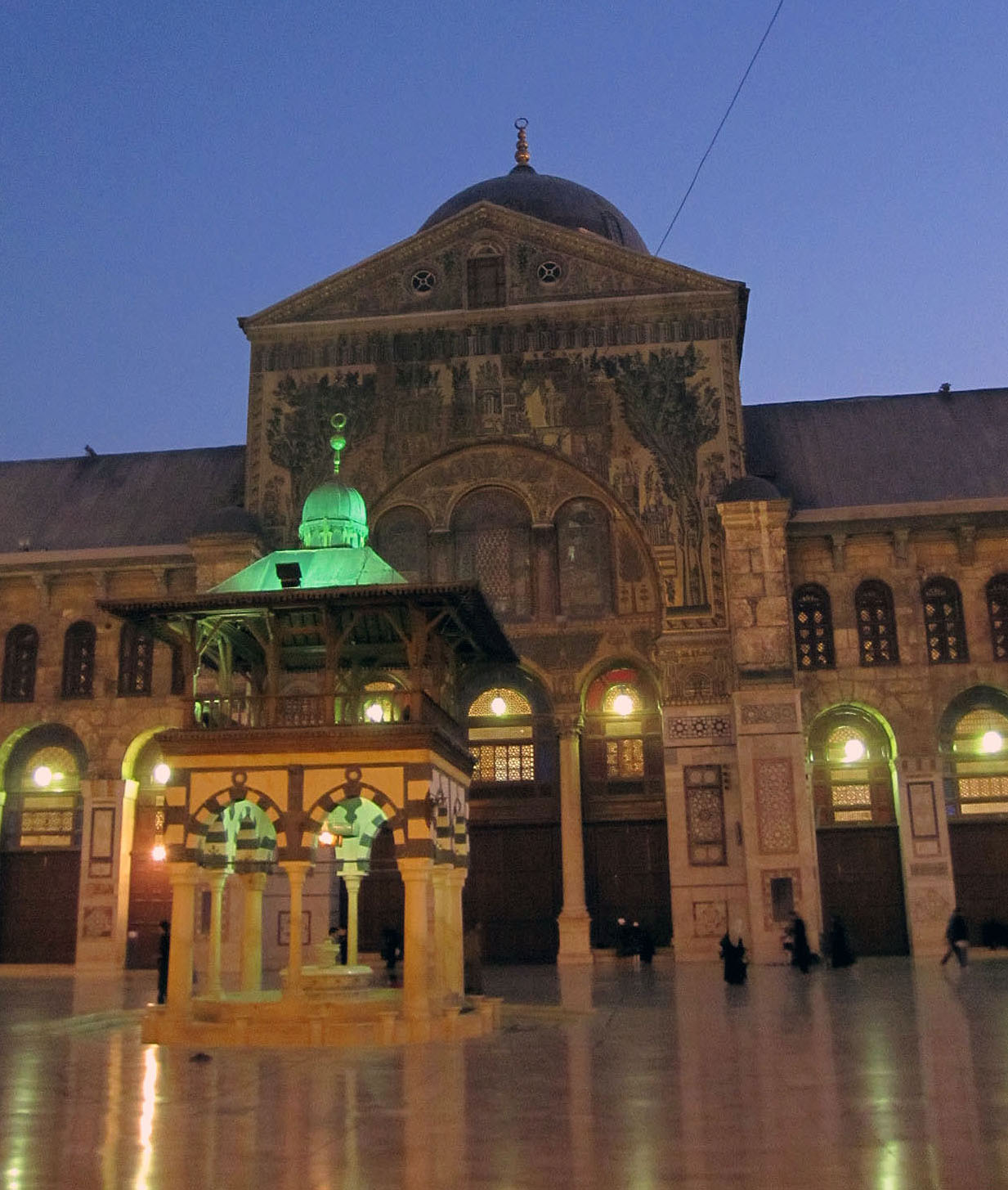
The Umayyad Mosque (Photo by Emily O'Dell)
The garden of love is green without limit,
and yields many fruits other than sorrow or joy.
Love is beyond either condition;
without spring, without autumn,
it is always fresh.
— Rumi
Posted in Blog
Comments Off on Seeing Green in Syria…
Linking Islam in Moscow & Damascus…

Visiting a Moscow mosque (Photo: Emily O'Dell)
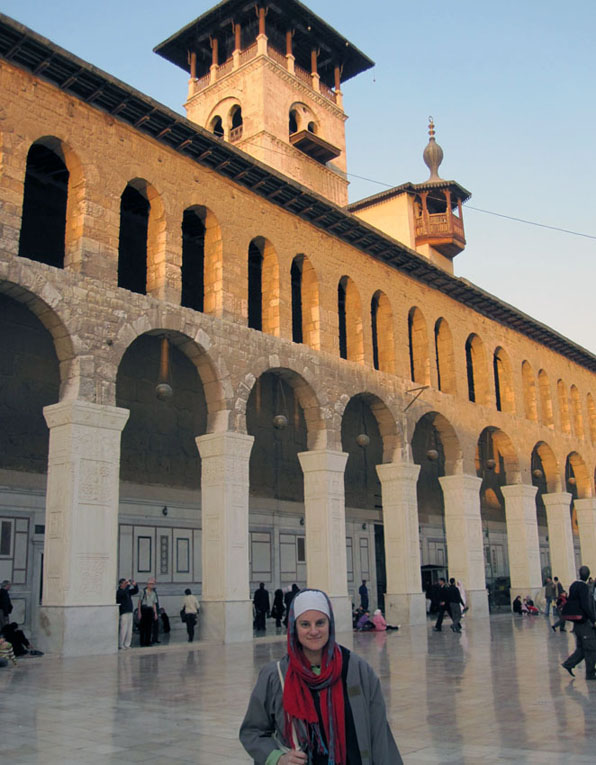
At the Umayyad Mosque in Syria
When most people think of Russia, they usually don’t think of the large number of Muslims that have lived within its borders for centuries. But in my ten-year quest through Africa, the Middle East, Central Asia and Eastern Europe to visit as many mosques, shrines, and Sufi teachers as possible, I was determined to see the mosques in St. Petersburg and Moscow–because I wanted to learn more about the history, practices, and Islamic jurisprudence of the region from imperial times through the Soviet era to the present. It was my passion for both Middle Eastern and Slavic Studies that compelled me to make the study of Sufism and Islamic law in Russia and Central Asia the focus of my Masters degree at Columbia in Russian, Eastern European and Central Asian Studies. When I first got to Russia, I was amazed by how interconnected these two regions of the world are–especially in the religious realm–even though we tend to put them in very different categories.
For reasons too complicated to explain in a short blogpost, Muslim religious scholars in Russia have been promoting Sufism for years. In fact, several months ago, Moscow’s chief Mufti Albir-khazrat Kragnov called for the Muslim community in Russia to integrate more Sufism into their spiritual lives. He also called on Russia to invite Muslim scholars from Syria to Russia to learn more about Syria’s “positive inter-confessional consensus” and “similarity with Russian realities.”
This is just one example of how religious officials at the state level from Syria and Russia have been engaging in an ongoing spiritual dialogue–based heavily on the doctrines of Sufism, as well as the explicit desire to improve Muslim and Christian relations…
Posted in Blog
Comments Off on Linking Islam in Moscow & Damascus…
Learning in a Russian Convent…
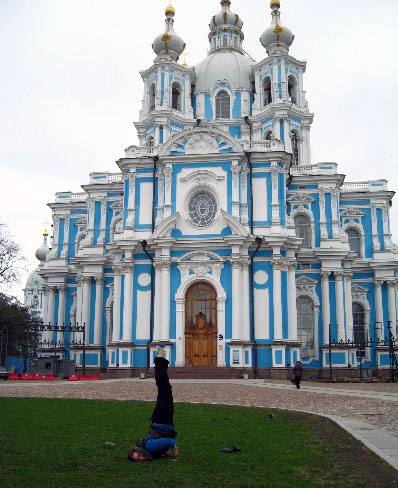
Trying to fit in at Smolny (Photo: Emily O'Dell)
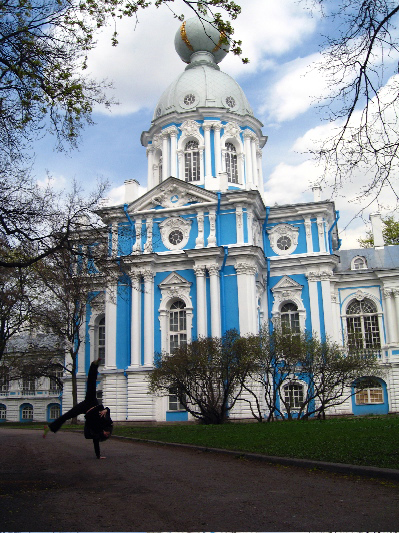
Upside down in front of the convent...
When I showed up for the first day of a program with St. Petersburg State University, and found out that our Advanced Russian classes would be taking place in the cells of the convent (below) next to this bewildering blue and white Baroque cathedral, I was thrilled–and could hardly believe it.
Wandering through the neighborhood, I discovered Bolshoy Dom–the KGB headquarters—as well as the Museum of Erotica (quite a combination). I also found out that before he was all grown up, Vladimir Putin lived in the same neighborhood too.
The cathedral–designed by the Italian architect Francesco Rastrelli (who also designed the Winter Palace)–is a jewel of baroque architecture. It is said that when architect Giacomo Quarenghi, who harbored intense hostility towards Rastrelli, would walk by the cathedral, he would stop, remove his hat, and say: “Ecco una chiesa!” (“Now that’s a church!”). That’s pretty much how I felt every day when I passed by it on my way to study Chekhov and Russian film in the convent next door.
Catherine the Great, however, thought that cathedrals in this style resembled whipped-cream. So she focused on funding other projects–like the establishment of an early school for women on the same grounds of the cathedral.
Smolny Cathedral and convent have a rich architectural and educational history–in large part because their construction extended through several decades of imperial rule. Under the Soviets, however, Smolny Cathedral was closed in 1923, and–like so many other cathedrals–turned into a storehouse.
If you have the chance to visit Russia–definitely see Smolny Cathedral and convent–it’s well worth the visit…
Posted in Blog
Comments Off on Learning in a Russian Convent…
Fighting Russians…
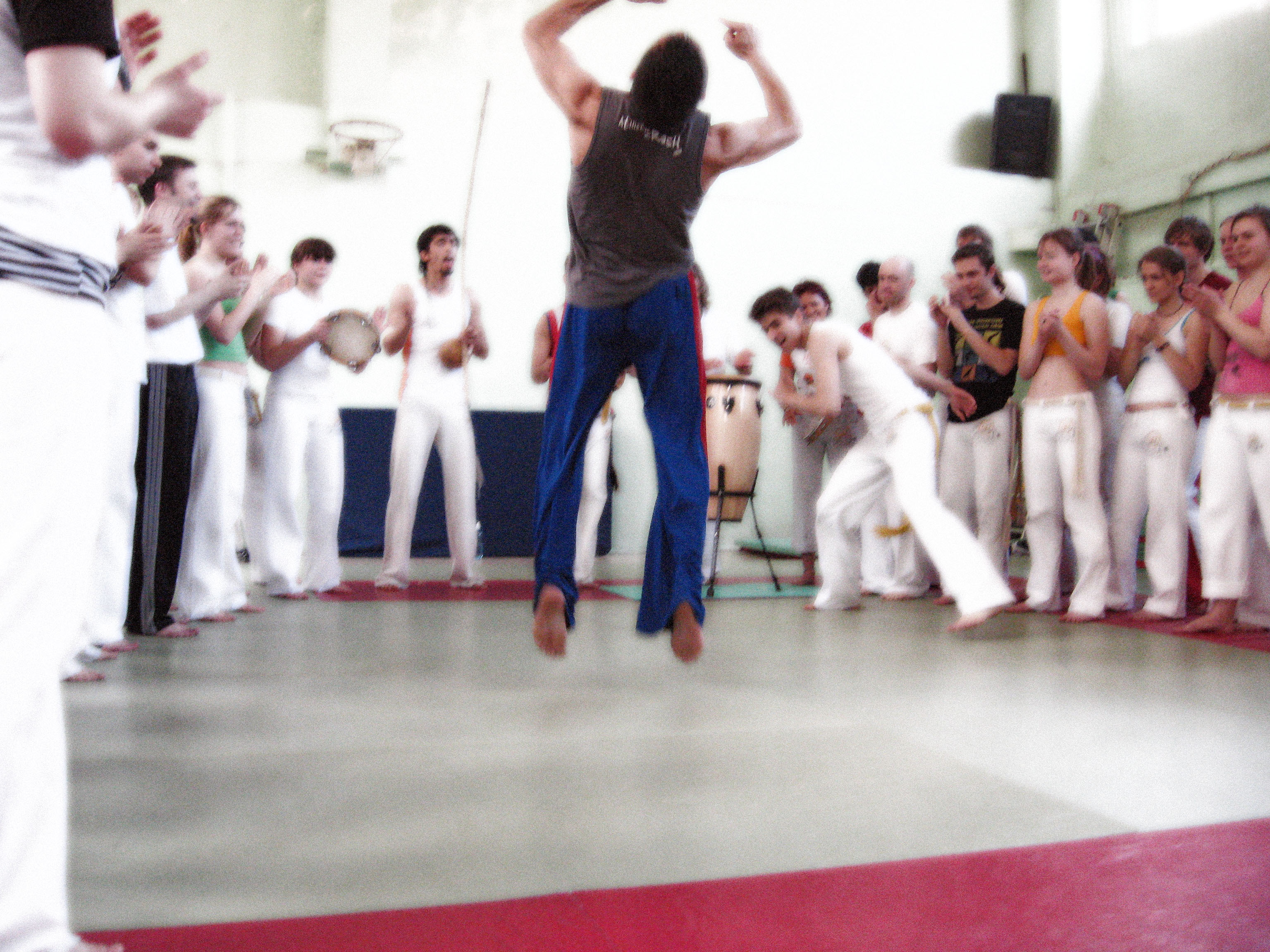
Capoeira in St. Petersburg, Russia (Photo by Emily O'Dell)
For thousands of years, survival was linked to our ability to kill
and destroy. Today and in the future, survival will depend on our
capacity to live in peace with other men and with nature. Modern man
needs to reprogram his mind. He needs to channel in another direction
the energy used in war and in the killing of other men and animals.
We think capoeira can make a contribution to this process.
— Nestor Capoeira

Doing Red Square capoeira in the Kremlin...
In capoeira, a capoeirista is believed to be more masterful if he shows how he could inflict violence–but instead withholds the strike. Withholding violence in capoeira is a sign of power, not weakness. To me, life is always more beautiful when we dance with difference, instead of trying to fighting it. So today, when I’m listening to talk about Putin’s plan, and seeing images of the Kremlin in the news, I’ll be reminiscing about the time I didn’t cower in the Kremlin–but instead chose to cartwheel through it…
After all, in its life philosophy capoeira is love, celebration, and also joy. — Joao Pequeno
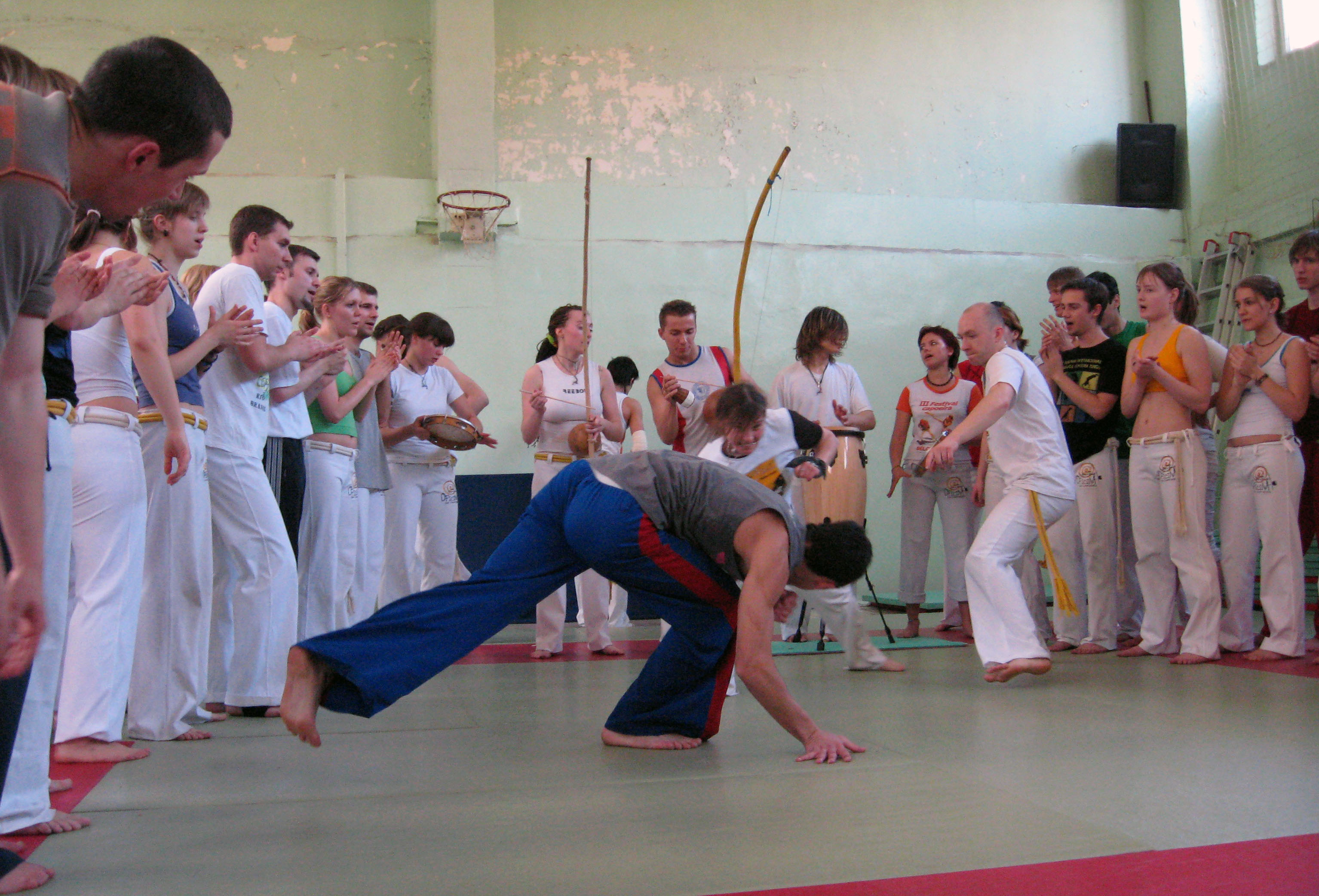
Photo by Emily O'Dell
Posted in Blog
Comments Off on Fighting Russians…
From Beirut to Moscow: Talking it Out…
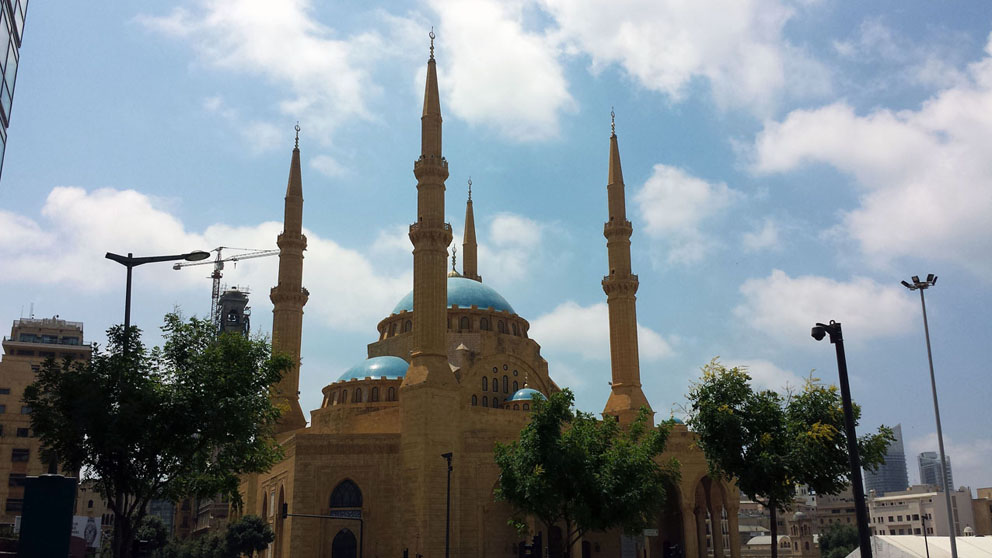
Downtown Beirut (Photo by Robert O'Dell)
It is alarming that military intervention in internal conflicts in foreign countries has become commonplace for the United States. Is it in America’s long-term interest? I doubt it. Millions around the world increasingly see America not as a model of democracy but as relying solely on brute force, cobbling coalitions together under the slogan “you’re either with us or against us.” — Putin
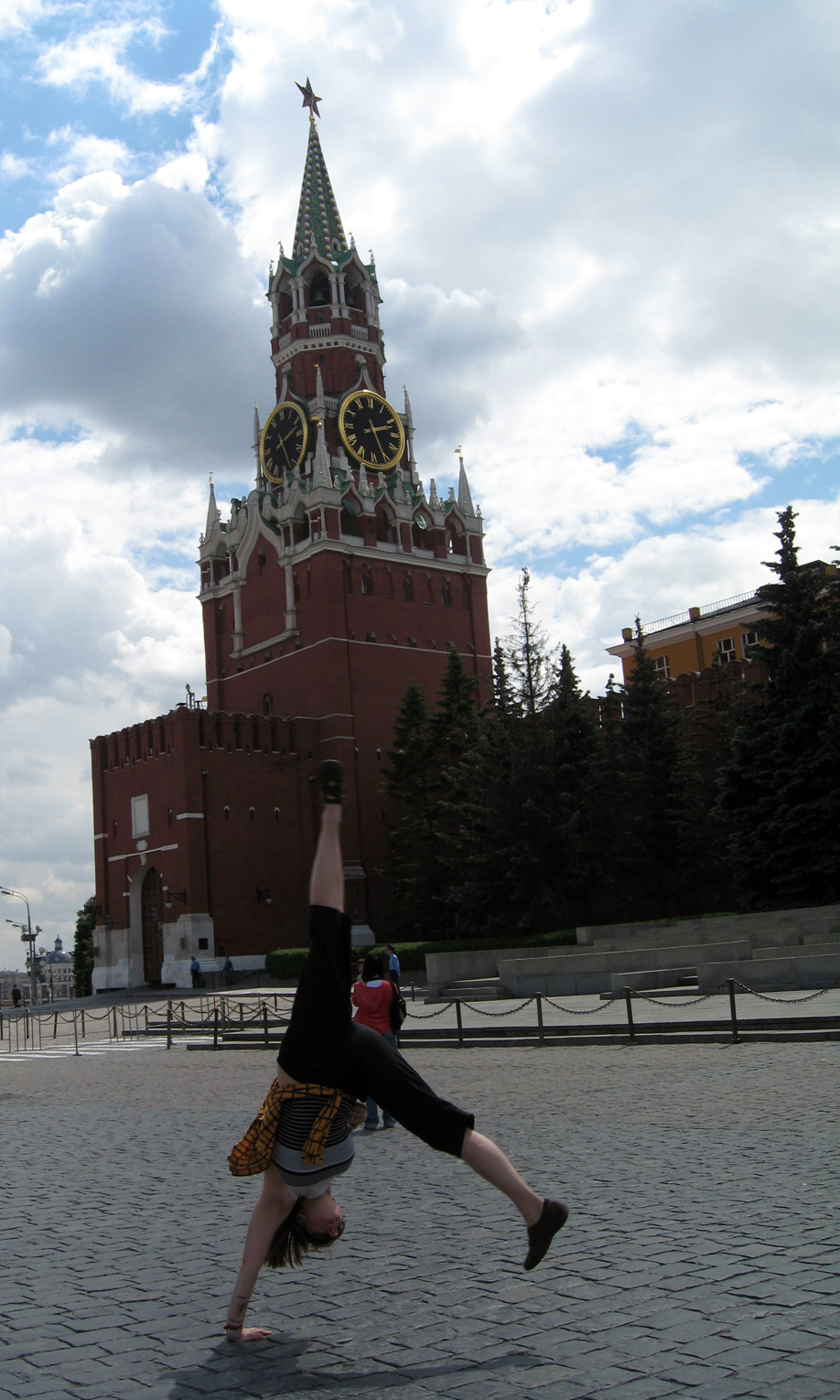
Upside down in the Kremlin--you don't need to know Russian to read the clock--it's time for peace!
The sober mood permeating life in Beirut last week lifted when talk of a diplomatic solution to the chemical weapons crisis next door brought a sense of relief for many throughout the city. Last week, fear of the effects of an impending foreign military strike in Syria sent so many scrambling to the airport there were no plane tickets left to leave. To witness so much fear and terror in those around me about the very real possibility of war was heartbreaking. But now talk in Beirut has shifted from “Armageddon” back to the beach–though everyone knows that things here can change drastically in an instant…
Regardless of right or wrong–action or inaction–it has been amazing to watch the dynamic and engaged dialogue which has unfolded “this time around” about peace. Whether it’s about peace in Syria or peace for peace’s sake alone–this week we witnessed undeniable friction and opposition–from military leaders down to the grassroots level–to the destructive impulse of rushing into a military solution without having all of the facts first. It has been beautiful to see so many hearts and minds awakening to the possibility, promise, and power of peace.
This week, as I read emails from people around the world expressing their hopes for peace not just in Syria but all over the world, I was reminded of how interconnected we all are, especially in this digital age–and how the events in one place really can affect us all–as I witnessed first hand last week here in Beirut.
When I woke up this morning, I was surprised to find an Op-Ed by Vladimir Putin in the New York Times–just another example of how this ongoing global dialogue about peace, conflict, and resolution is unfolding in the most unexpected ways. Where it will all lead, we cannot know–but in the meantime, I’m watching it all with wonder…
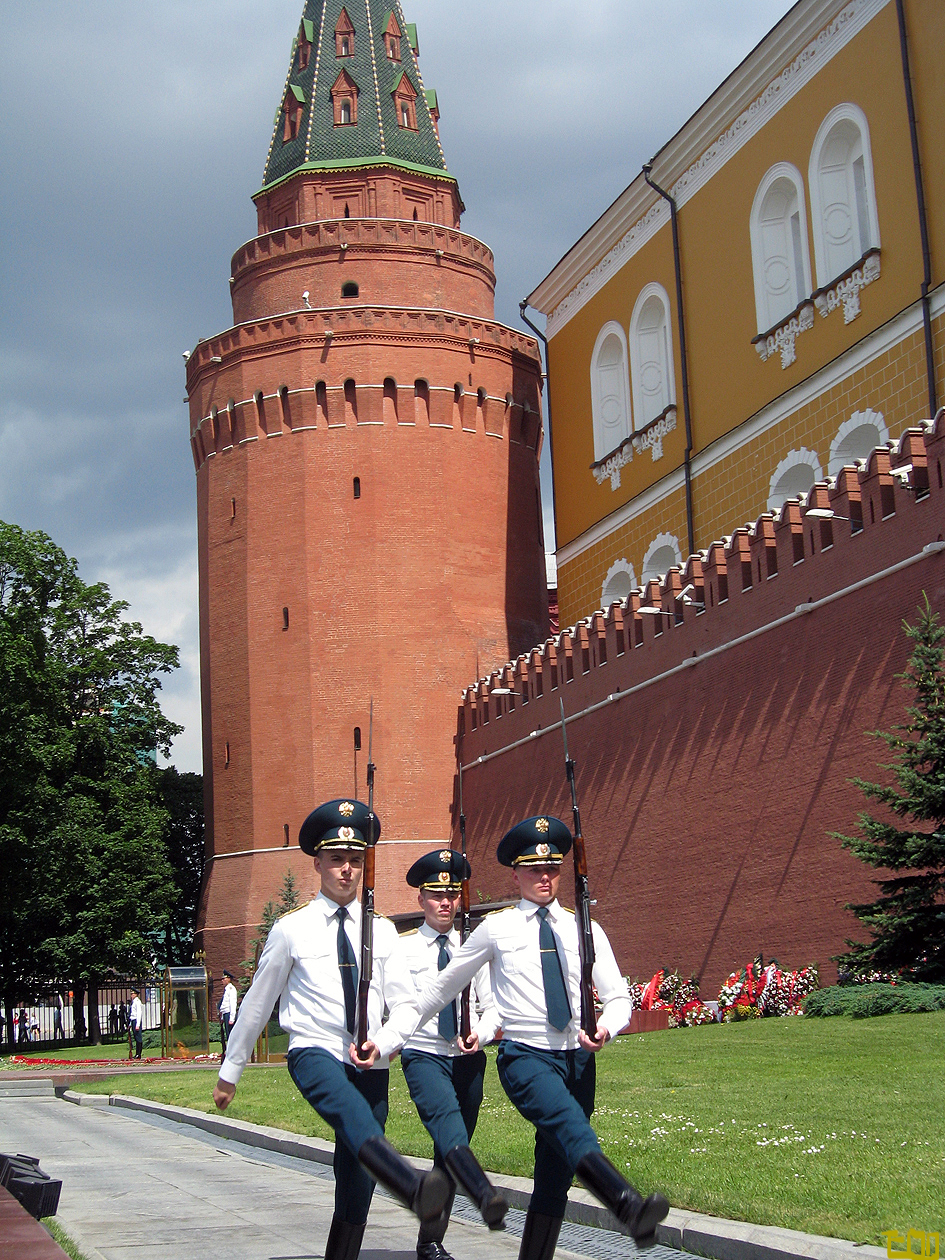
Kremlin Guards (Photo by Emily O'Dell)
My working and personal relationship with President Obama is marked by growing trust. I appreciate this. I carefully studied his address to the nation on Tuesday. And I would rather disagree with a case he made on American exceptionalism, stating that the United States’ policy is “what makes America different. It’s what makes us exceptional.”
It is extremely dangerous to encourage people to see themselves as exceptional, whatever the motivation. There are big countries and small countries, rich and poor, those with long democratic traditions and those still finding their way to democracy. Their policies differ, too. We are all different, but when we ask for the Lord’s blessings, we must not forget that God created us equal. — Vladimir Putin
Posted in Blog
Comments Off on From Beirut to Moscow: Talking it Out…
Syrian Shades…
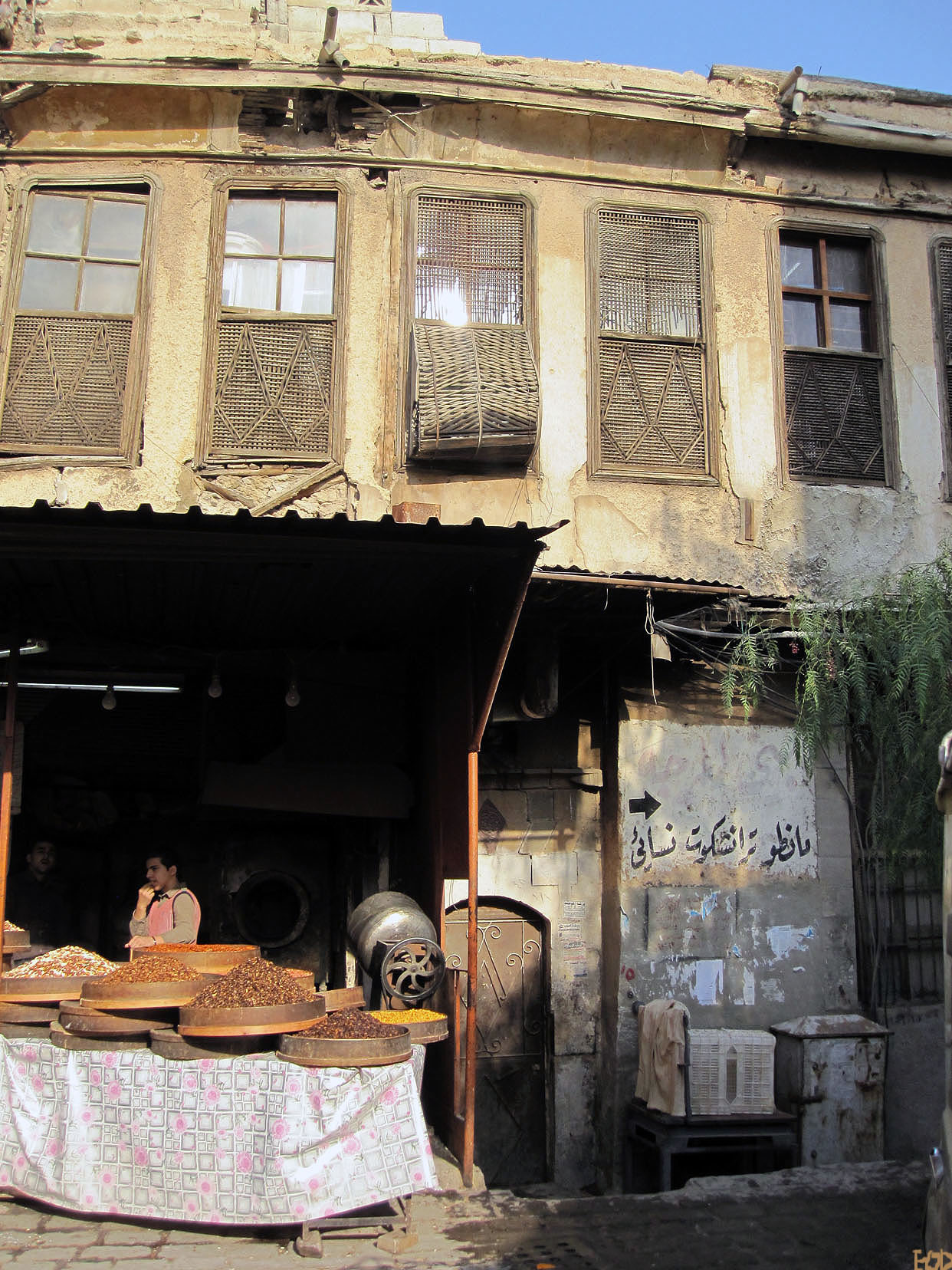
Photo by Emily O’Dell
When I was on my way to visit the tomb of Ibn Arabi in Damascus–one of the the Sufi masters mentioned in my piece on Sufis in Syria–I was struck by the beauty of the sun hitting the shades on one of the houses nearby, while a young man was selling nuts under a makeshift metal canopy beneath. Perhaps in a later post, I’ll explain the unexpected thing that happened to me while I was inside the shrine of Ibn Arabi at night…
Posted in Blog
Comments Off on Syrian Shades…
Tonight, I’m Listening…
Tonight in Beirut, I’m listening to the beautiful music of Toufic Farroukh, a Lebanese jazz composer…enjoy…
Posted in Blog
Comments Off on Tonight, I’m Listening…
Repairing the World & Playing with Language…
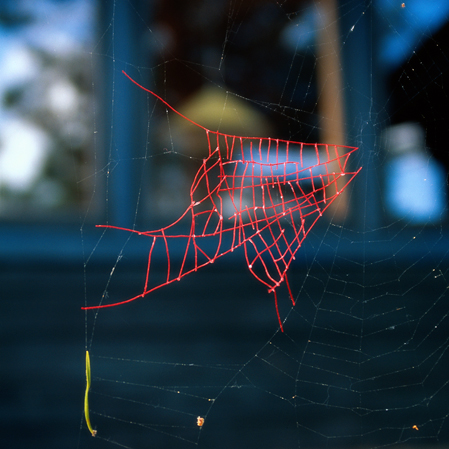
Mended Spiderweb #8 (Fish Patch) Cibachrome, 20 x 20 inches, 1998
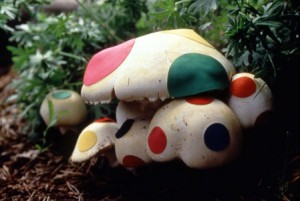
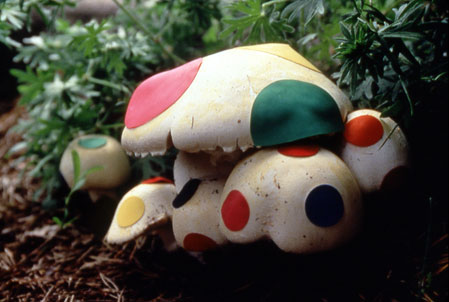
- Renovated Mushroom (Tip-Top Tire Rubber Patch Kit) Cibachrome, 30 x 40 inches, 1998
I’m very interested in situations where there are limits and boundaries to what’s possible and how you find your way around those obstacles, how you think on your feet. How you make something out of nothing… — Nina Katchadourian
All year in Lebanon, I’ve been spending a lot of time in nature. And whenever I’m swimming with the turtles in the sea or taking a hike through the cedars, I find myself thinking of the witty, playful and endearing eco-art of my friend Nina.
I first met Nina Katchadourian when we were members of the same Javenese gamelan ensemble at Brown. Indonesian orchestras tend to attract curious and creative souls, and every time we stopped for a break from playing our meditative music, I enjoyed asking Nina all about her latest artistic endeavors–many of which were inspired by her travels abroad, and her extended time spent in nature.
Whether she’s mending spiderwebs with red sewing thread (above), or using a bicycle tire patching kit to patch up mushrooms with small tears on the caps, Nina’s playful (and uninvited) collaborations with nature have encouraged me to re-conceptualize my own relationship to the natural world–to find beauty and possibility in overlooked natural designs–and even destruction and decay…
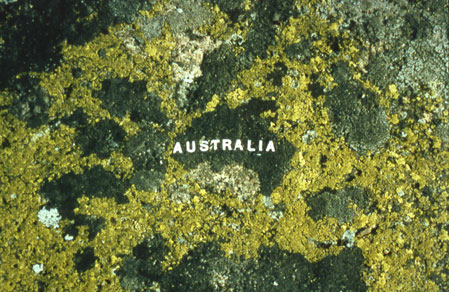
Moss Maps C-prints, each 13.5 x 20 inches, 1992
For her series Moss Maps (above), Nina found and photographed patches of lichen in the shape of islands and continents, when spending the summer in the Finnish archipelago where her family has a home. Putting rub-on letters on the lichen instantly transformed this granite rock into a rearranged organic atlas. In the goofy piece below, Nina critiques her own “use” of nature by having carefully arranged caterpillars deliver a message of their own.

Quit Using Us C-print mounted to aluminum, 18 x 96 inches, 2002
It wasn’t until I got to Beirut that I learned of her family’s long connection to Lebanon–which she mentions in the piece below. Part of Nina’s interest in language, translation, and miscommunication derives being the daughter of multilingual migrants. To explore the arduous and often absurd process of assimilation, Nina enlisted the help of her parents to create “Accent Elimination”–in which a dialect coach tries to neutralize her parents’ accents, while Nina simultaneously struggles to acquire them.
Nina’s piece “Natural Car Alarms”, which was profiled on NPR, involves three cars rigged with modified car alarms. The six-tone siren has been replaced with bird calls.
The idea for the project was in fact the result of a misunderstanding. I heard a bird in the jungles of Trinidad that I mistook for a car alarm.
— Nina Katchadourian
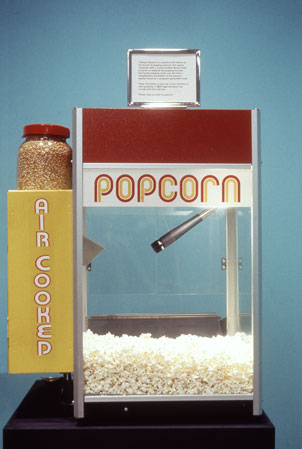
Talking Popcorn Concession stand popcorn machine, microphone, laptop with custom-written Morse Code program, printed paper bags, dimensions variable, 2001
Nina’s interest in the translation of sound into recognizable speech appears in her sound sculpture piece Talking Popcorn (left)–which contains a hidden computer to “translate” the sound of corn popping into Morse Code. A computer-generated voice gives a simultaneous spoken translation. Surprisingly, the first word ever produced by this machine was: WE.
Much of my subject matter comes from the mundane everyday. I’m always trying to look at the things we are overlooking and underestimating in terms of their interest or value… — Nina
As a world traveler, I’m in love with her Seat Assignment series–for which she creates photographs and video in flight using only the most basic of materials on a plane–a camera phone, pretzels, magazines, and even toilet paper. For example, her Lavatory Self-Portraits in the Flemish Style (below) were created by locking herself in the lavatory of a plane to take self-portraits on her phone–while dressed with toilet paper in the style of fifteenth century Flemish portraiture.
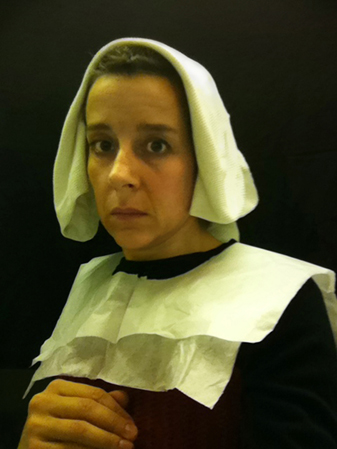
Lavatory Self-Portrait Flemish Style
To see more of Nina’s work, please go here.
Posted in Blog
Comments Off on Repairing the World & Playing with Language…
Club Day…
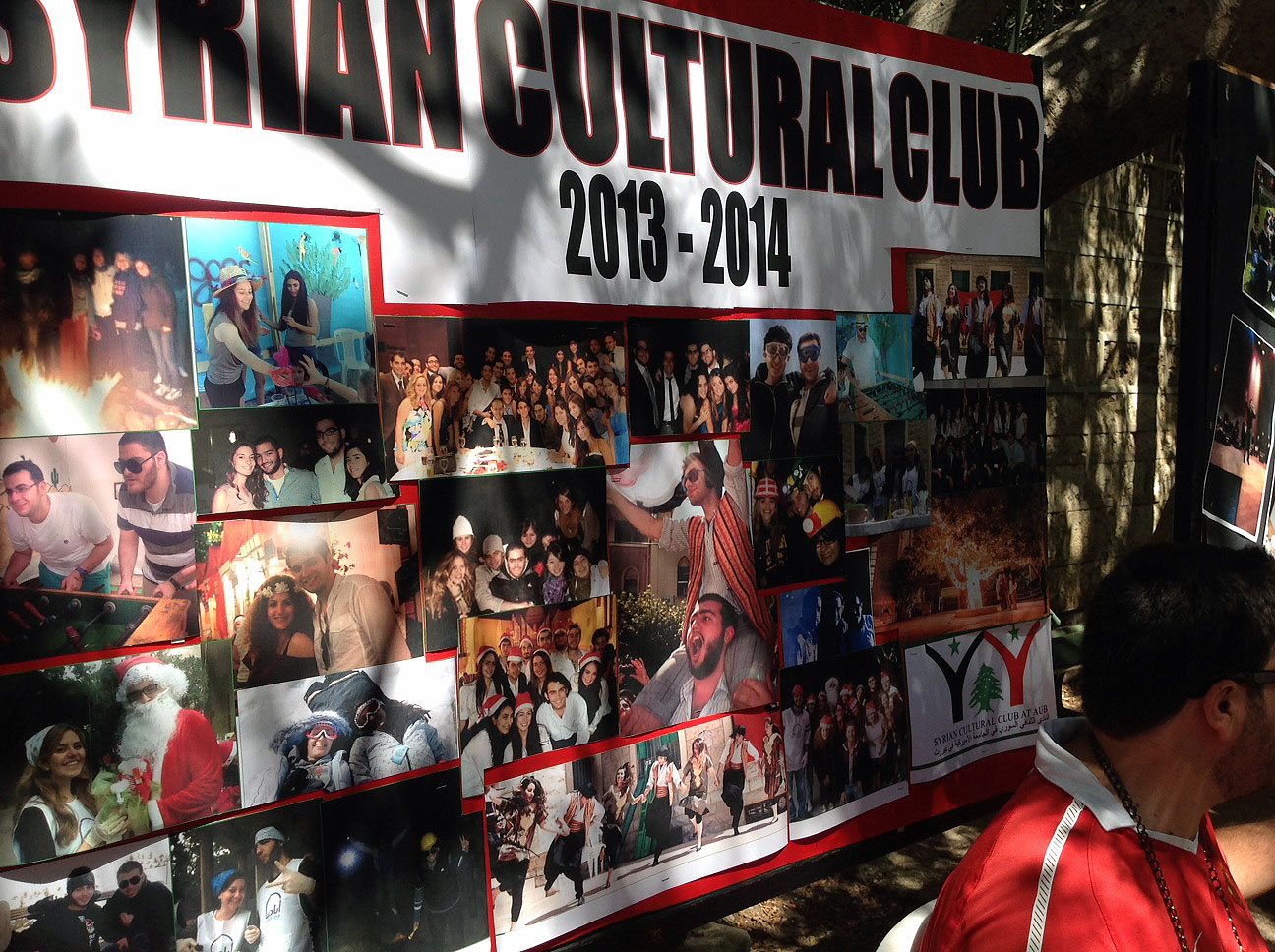
Photo by EOD
Today is club day at the American University of Beirut–and seeing the students set up their stands this morning to recruit new club members was a welcome reminder of the astounding diversity of AUB’s student body. Off the top of my head, I can’t think of any campus in the world more diverse than AUB. With 18 official religious confessions in Lebanon alone, our students bring a range of different religious, cultural, national, and ethnic backgrounds and worldly experiences to the classroom. Because our students come from Lebanon, Jordan, Iraq, Syria, Saudia Arabia, Egypt, Palestine, Turkey and beyond, there are too many cultural clubs to mention them all by name. Sometimes the classroom here can feel like a mini-meeting at the United Nations. How fortunate we are to have so many diverse points of view to draw upon in our collective and dynamic quest for knowledge and understanding–which is just one of the many reasons why AUB is one of the coolest places in the world…
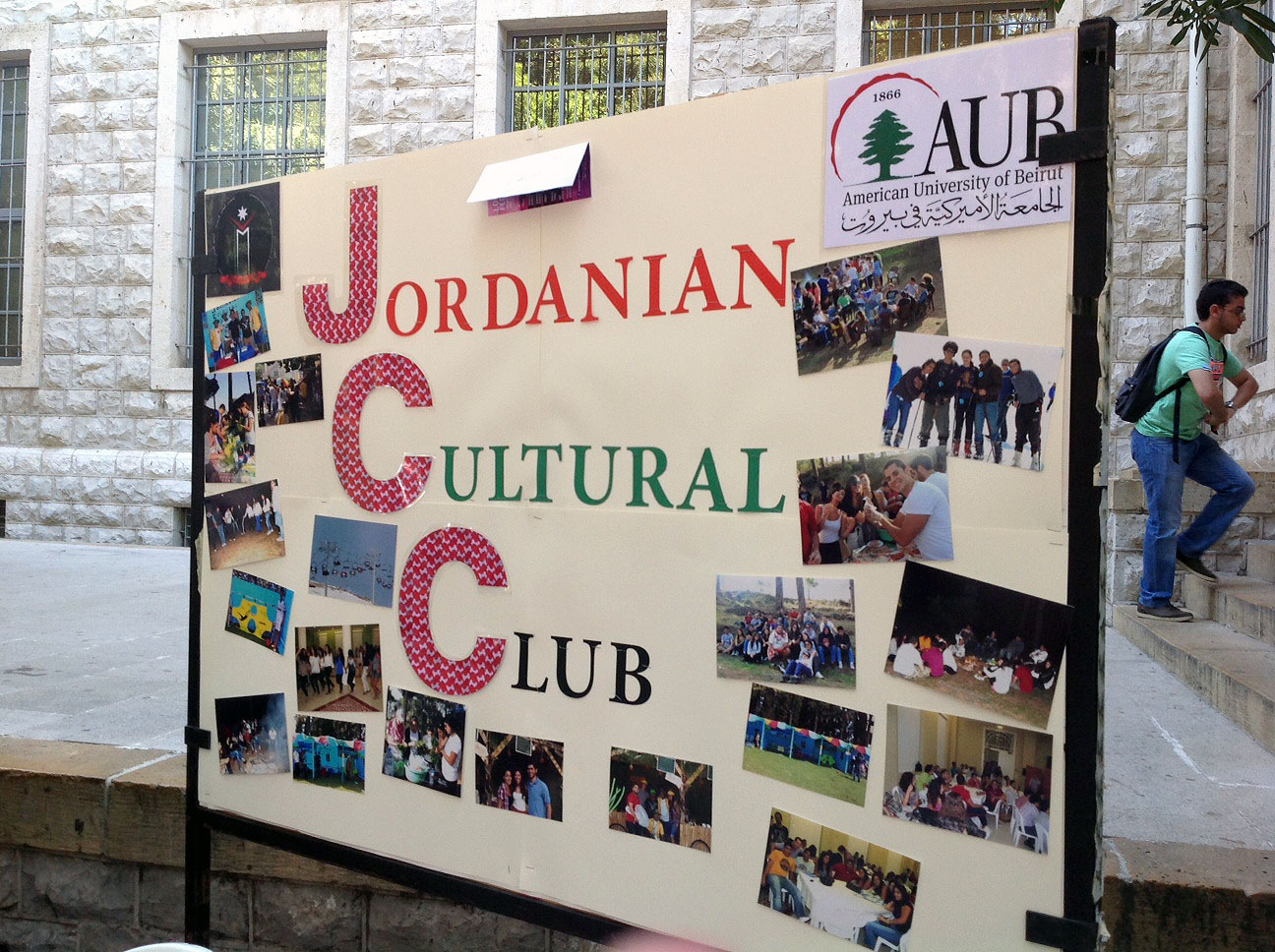
Photo by EOD
Posted in Blog
Comments Off on Club Day…
Crying Out Loud…
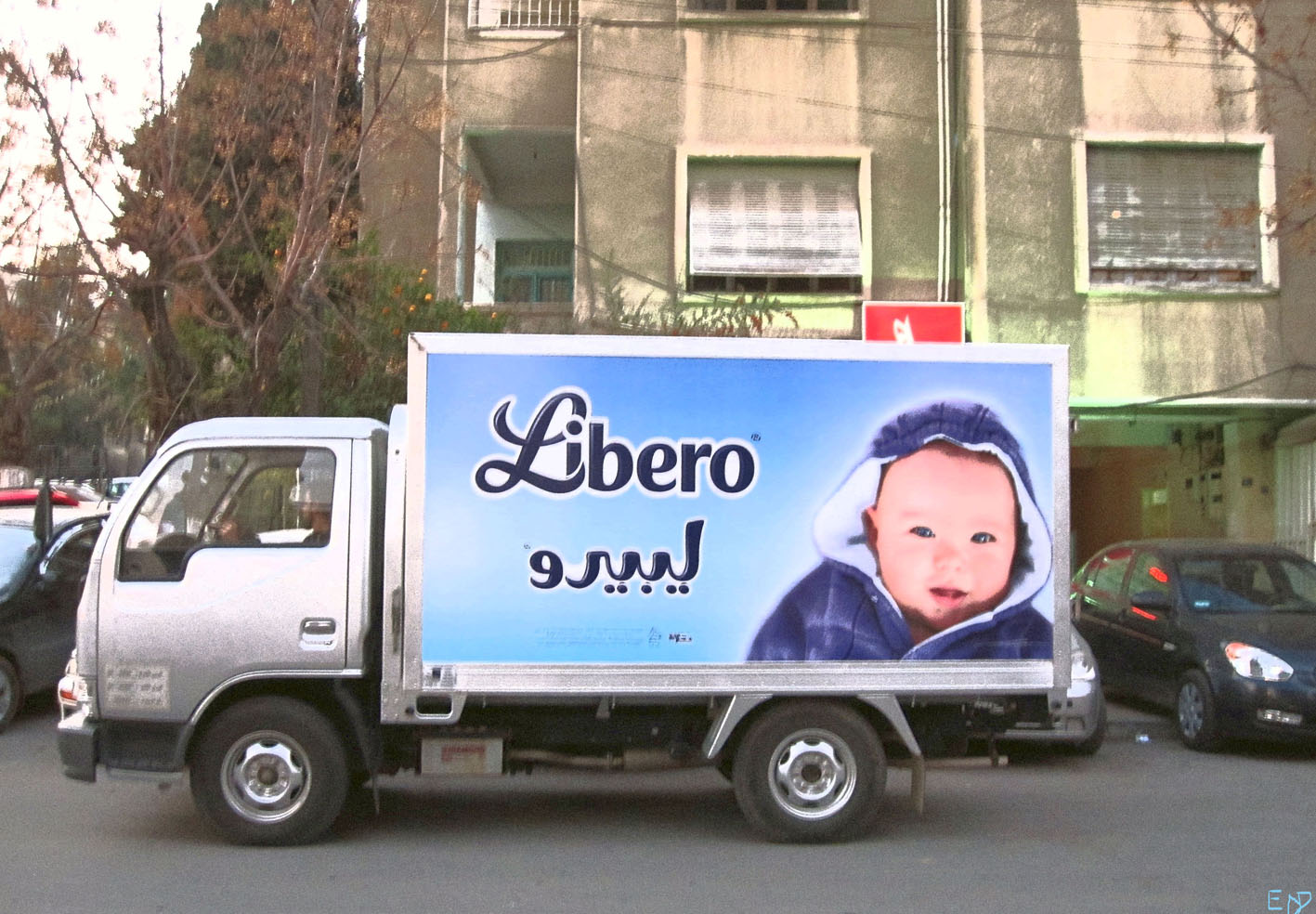
A truck in Syria (Photo by Emily O'Dell)
St. Jude's in Beirut...
Crying out loud and weeping are great resources.
A nursing mother, all she does
is wait to hear her child.
Just a little beginning-whimper
and she’s there…
Cry out! Don’t be stoic and silent with your pain.
Lament! And let the milk of loving flow into you.
— Rumi
Posted in Blog
Comments Off on Crying Out Loud…
Mad with Life…
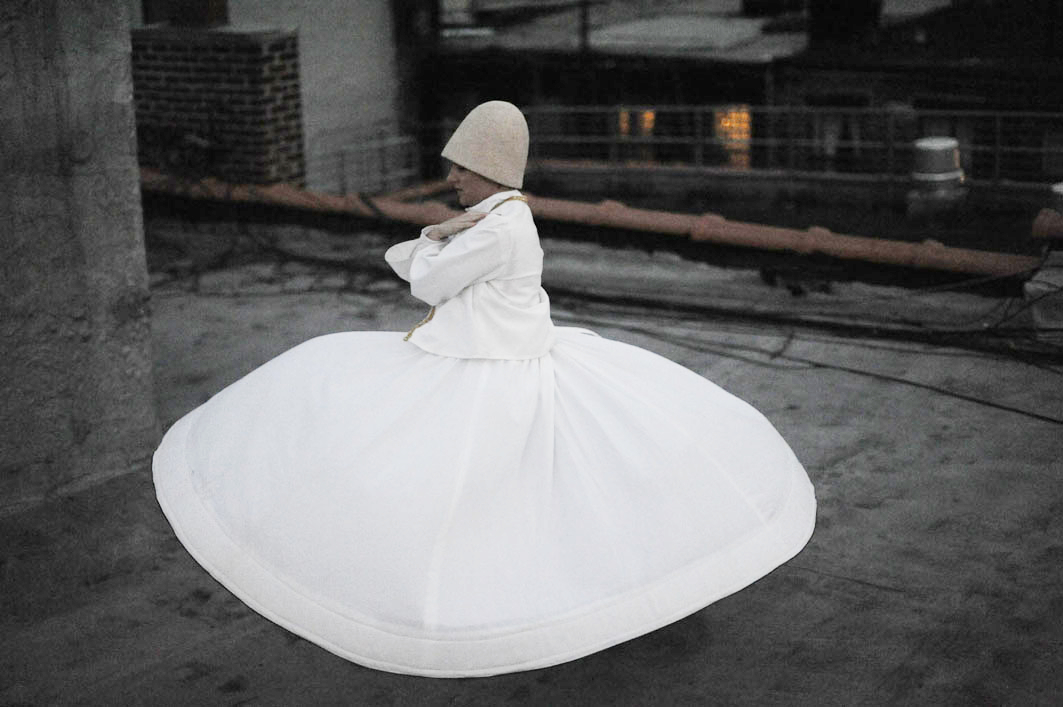
Whirling like a UFO on my rooftop in Harlem…
Break open my skull, pour in the wine of madness.
Let me be mad as You are; mad with You, mad with life.
— Rumi
Posted in Blog
Comments Off on Mad with Life…