 Emily’s Blog
- Sunset Beach Tai Chi July 22, 2024
- Coffee with Abu… July 22, 2024
- Rumi Latte in Beverly Hills July 22, 2024
- Judging a Burmese TedTalk July 22, 2024
- Mystical Tajik Cafe in Beverly Hills July 21, 2024
- Hollywood: Brown Film Festival July 21, 2024
- New Play Premiere in Burma July 21, 2024
- Bhutan Meets Malibu & Mulholland July 21, 2024
- Tricycle Bliss July 21, 2024
- Kung Fu Panda July 21, 2024
Category Archives: Blog
Sweet Goo in Syria…
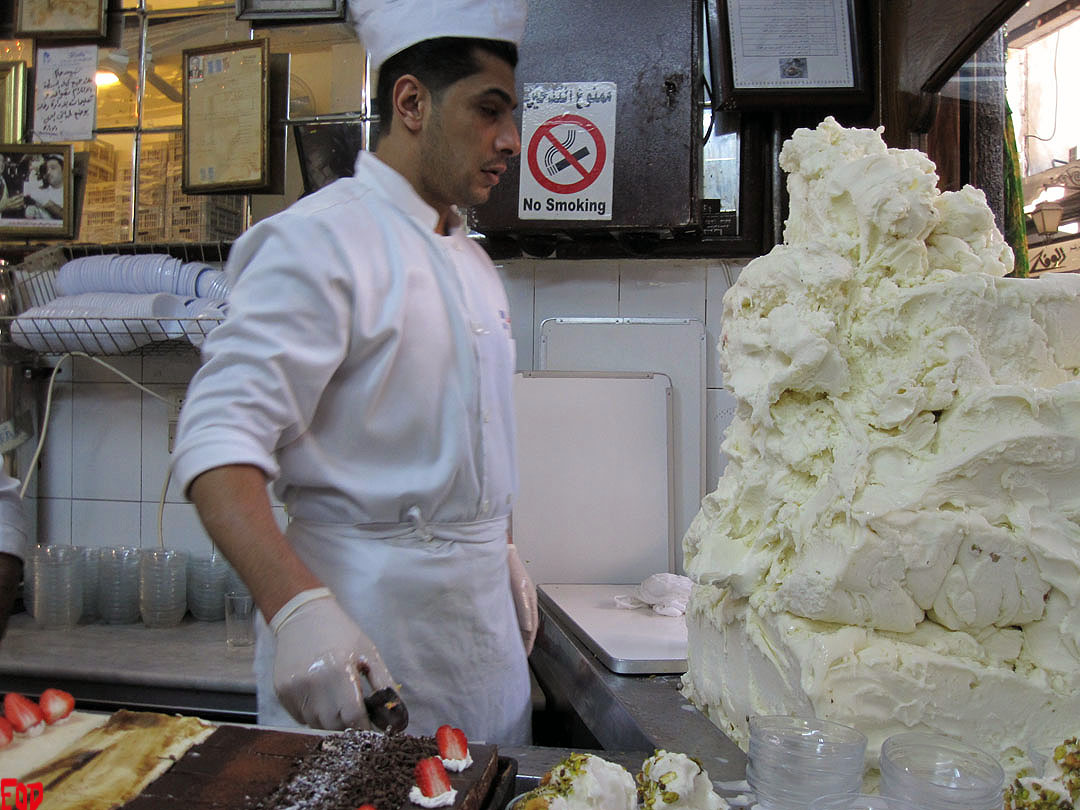
Syrian sweets (Photo: Emily O'Dell)
Posted in Blog
Comments Off on Sweet Goo in Syria…
Madness & Minarets…
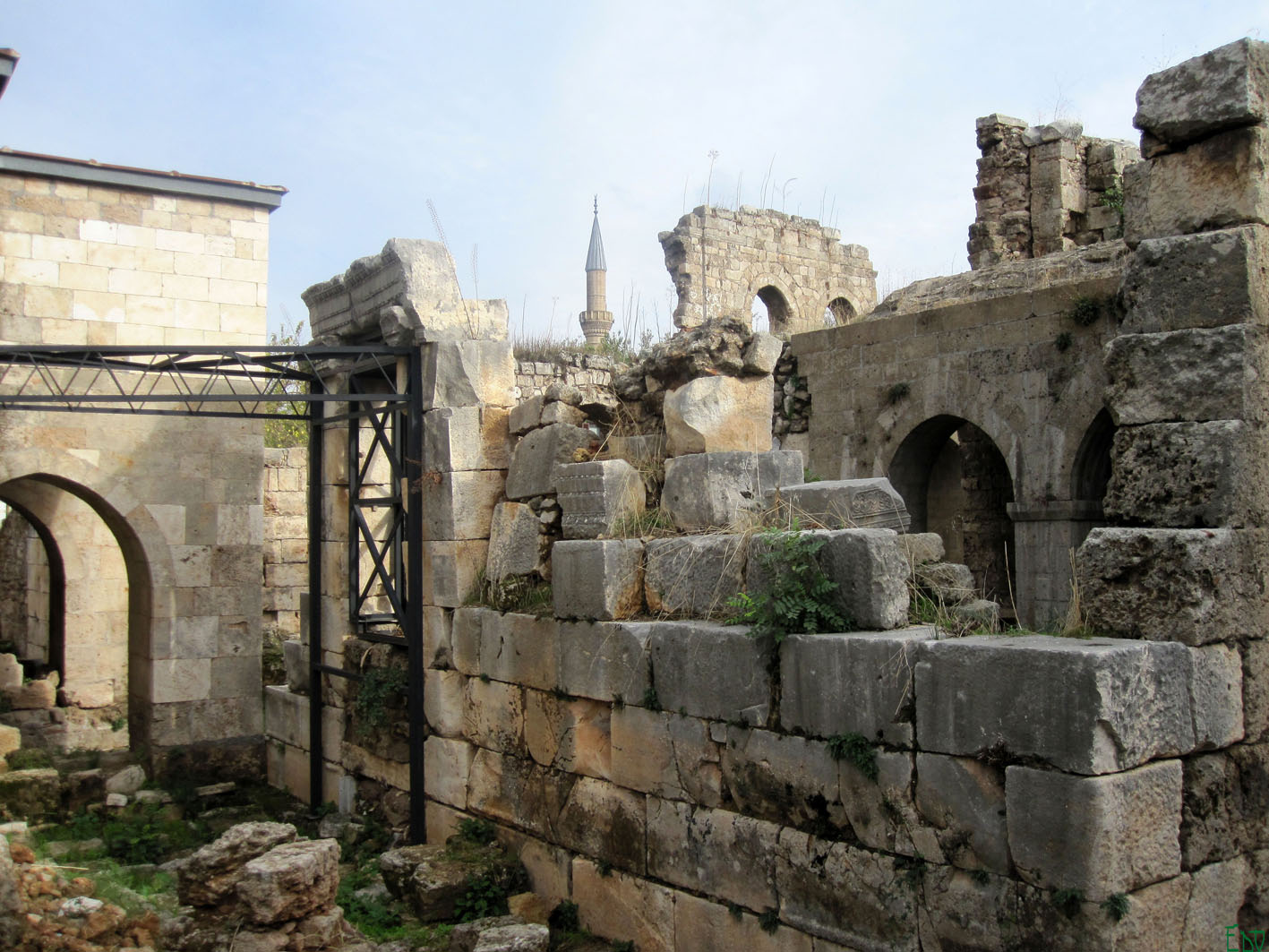
Exploring mosques in Antalya, Turkey (Photo: Emily O'Dell)
My love for you has driven me insane
I wander aimlessly the ruins of my life, my old self a stranger to me
Because of your love I have broken with my past…
— Rumi
Posted in Blog
Comments Off on Madness & Minarets…
Today in Beirut…
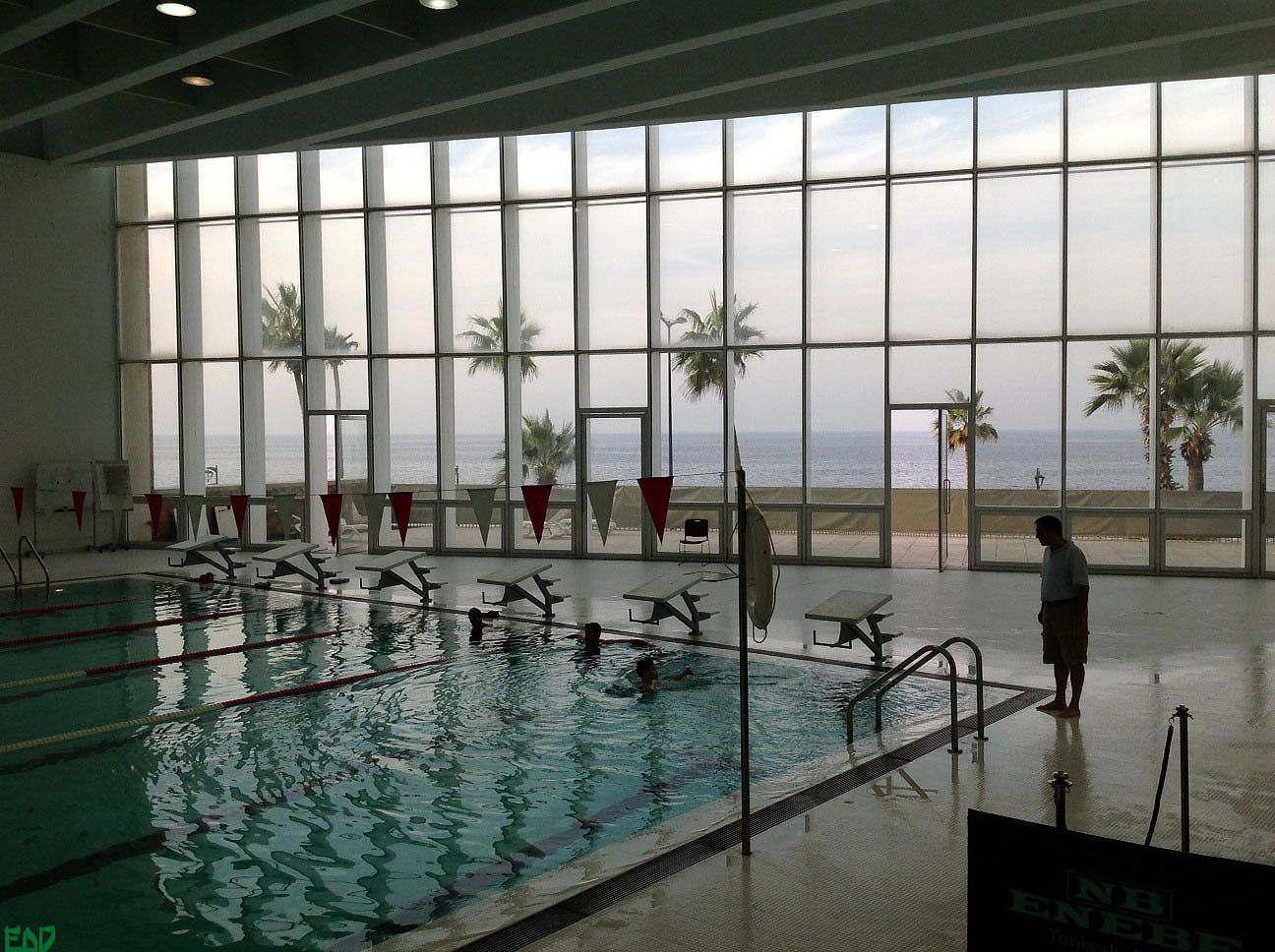
Swim-time (Photo: Emily O'Dell)
Posted in Blog
Comments Off on Today in Beirut…
A Hundred Deserts…
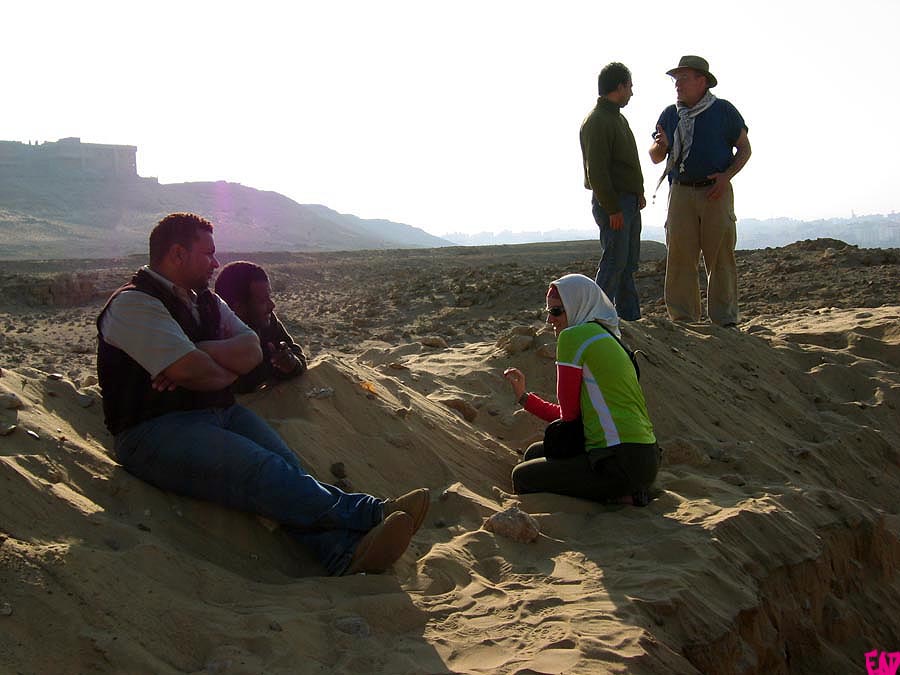
Excavating at the Great Pyramids of Giza (Photo: Emily O'Dell)
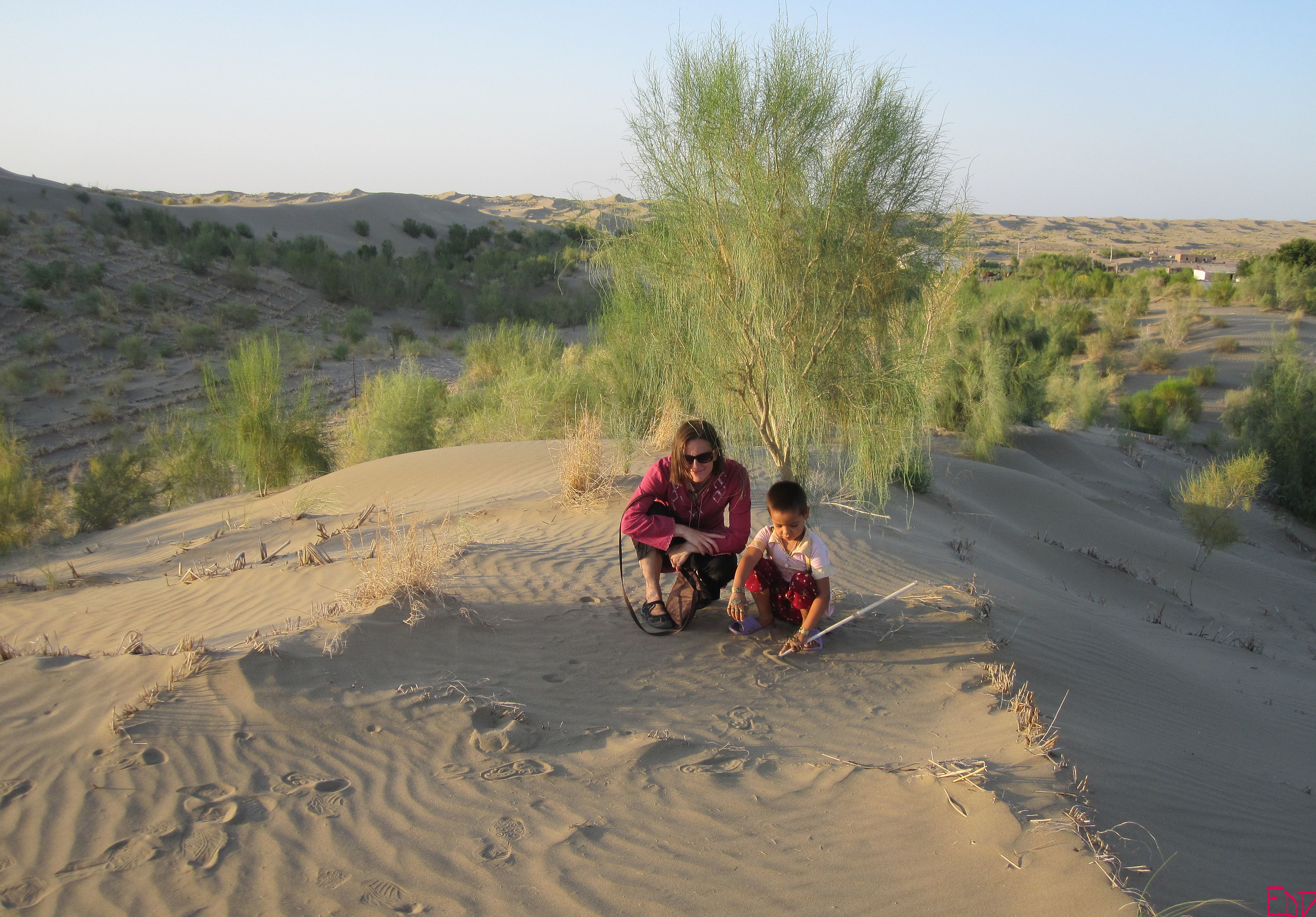
Trekking through Turkmenistan (Photo: Emily O'Dell)
Go ahead: ask me!
Ask me about Love,
and I will tell you the essence of madness.
Ask me of an intellect gone mad,
and I will show you a soul departed for good.
Ask me of a hundred calamities,
of a hundred life transformations.
Ask me of a hundred deserts engulfed in fire.
Ask me of a hundred oceans red with blood…
— Rumi
Posted in Blog
Comments Off on A Hundred Deserts…
Today in Beirut…
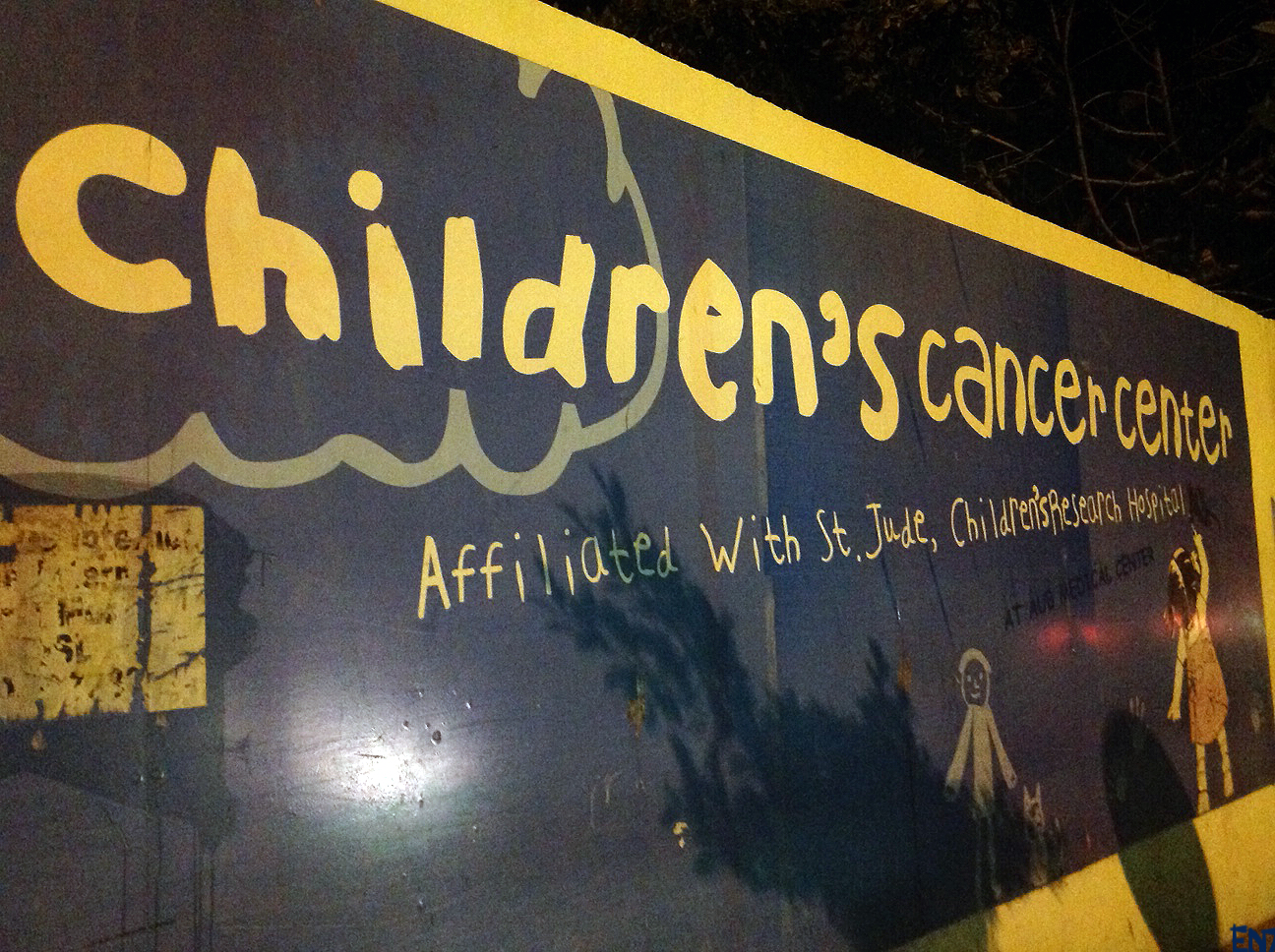
Tonight in Beirut (Photo: Emily O'Dell)
Before I went to St. Jude’s this afternoon, I was looking for a quote for my morning blog post about Istanbul–and came across this:
To be a real dervish is to lift up those who have fallen,
to wipe the tears of the suffering,
to caress the friendless and the orphaned.
— Shaykh Muzaffer Ozak el-Jerrahi
As my bald toddler friends and I played today in the playroom at St. Jude’s, I kept thinking of those words–and wishing I could do more to help. Every time my shift comes to an end, I’m always sad to leave–and to know that my playmates can’t. If I had the time, I’d volunteer there every day…
To make a donation online to support the treatment of the children at St. Jude’s in Beirut, please click here.
Posted in Blog
Comments Off on Today in Beirut…
Visiting Sufi Masters in Istanbul…

At the Jerrahi Sufi lodge in Istanbul (Photo: Emily O'Dell)

Entering the Jerrahi Sufi lodge (Photo: Emily O'Dell)
The sheikhs are the pourers of the wine and the dervish is the glass. Love is the wine.
By the hand of the wine pourer, the glass — the dervish — is filled.
This is the short way.
Love could be offered to one by other hands.
This is the short way.
— Shaykh Muzaffer Ozak el-Jerrahi
Every time that I go to Turkey–which is usually about twice a year–I always set aside time to visit the revered living and dead Sufi masters scattered throughout Istanbul. The one shrine I never skip is found at the tekke of the Halveti-Jerrahi Sufi Order–pictured left and above.
An oasis of peace in a bustling city, the tekke is the perfect place to relax and meditate far away from the noise and demands of daily life. At this Sufi lodge, dervishes study Sufism, novices learn how to whirl, and all of the Sufis participate in a spirited dhikr/zikr ceremony attended by hundreds of people each week.
Behind the windows pictured above is buried the 17th-century founder of the order, Pir Nureddin Al-Jerrahi. An adjacent room serves as the final resting place of Shaykh Muzaffer Ozak el-Jerrahi–who transmitted this order to the “west”–at the end of the 20th century.
Lovers of the Truth do not notice people’s faults, for their own failings blind them of those of others. They do not curse, nor do they wish harm to anyone at all.
— Shaykh Muzaffar Ozak el Jerrahi
Below is a section of the Halveti Jerrahi Zikr performed by Sheykh Tosun Bayrak Al Jerrahi and his dervishes in New York in 2002…
Posted in Blog
Comments Off on Visiting Sufi Masters in Istanbul…
Behold: Afghanistan…
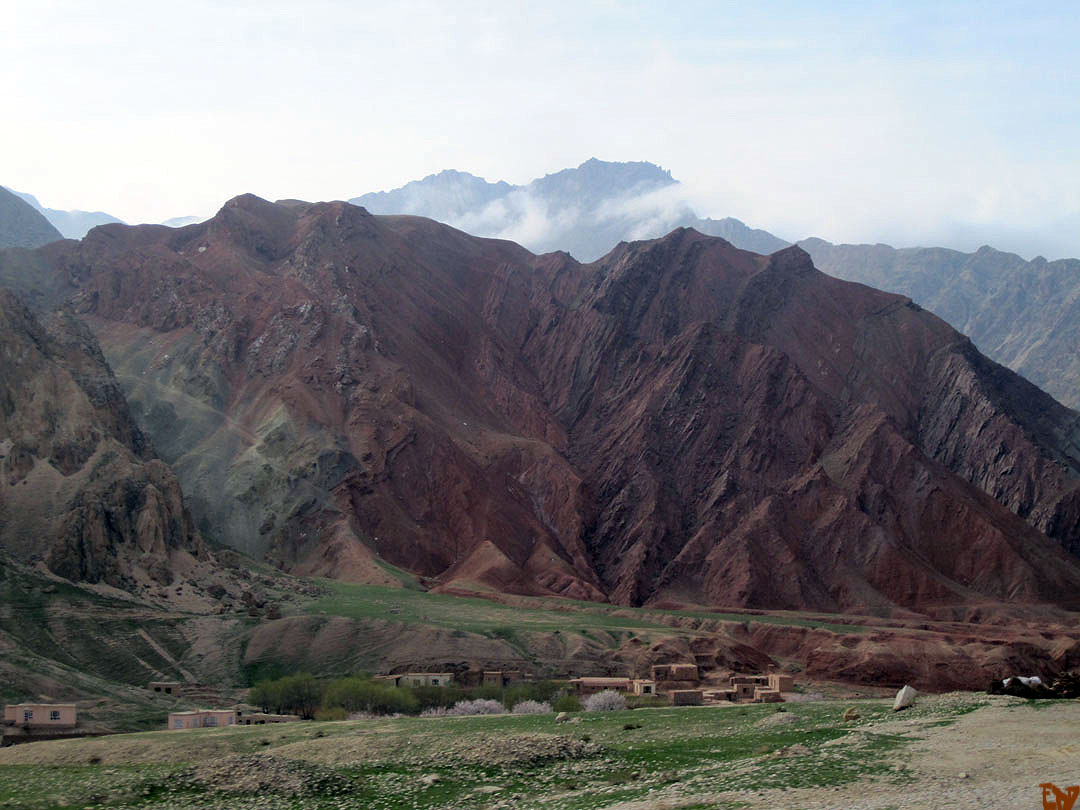
Exploring Afghanistan (Photo: Emily O'Dell)
This world is a mountain, in which your works are echoed back to you.
— Rumi
When I was traveling through Afghanistan to visit various Sufi shrines, I was struck by the color and size of this red, muddy mountain range–and the “miniature” mudbrick houses at its base. If you look closely, you can see tufts of pink and white cherry trees tucked in green folds of the valley…
Posted in Blog
Comments Off on Behold: Afghanistan…
Maine in Beirut…

Yum... (Photo: Emily O'Dell)
Posted in Blog
Comments Off on Maine in Beirut…
Chehel Sotun Palace…
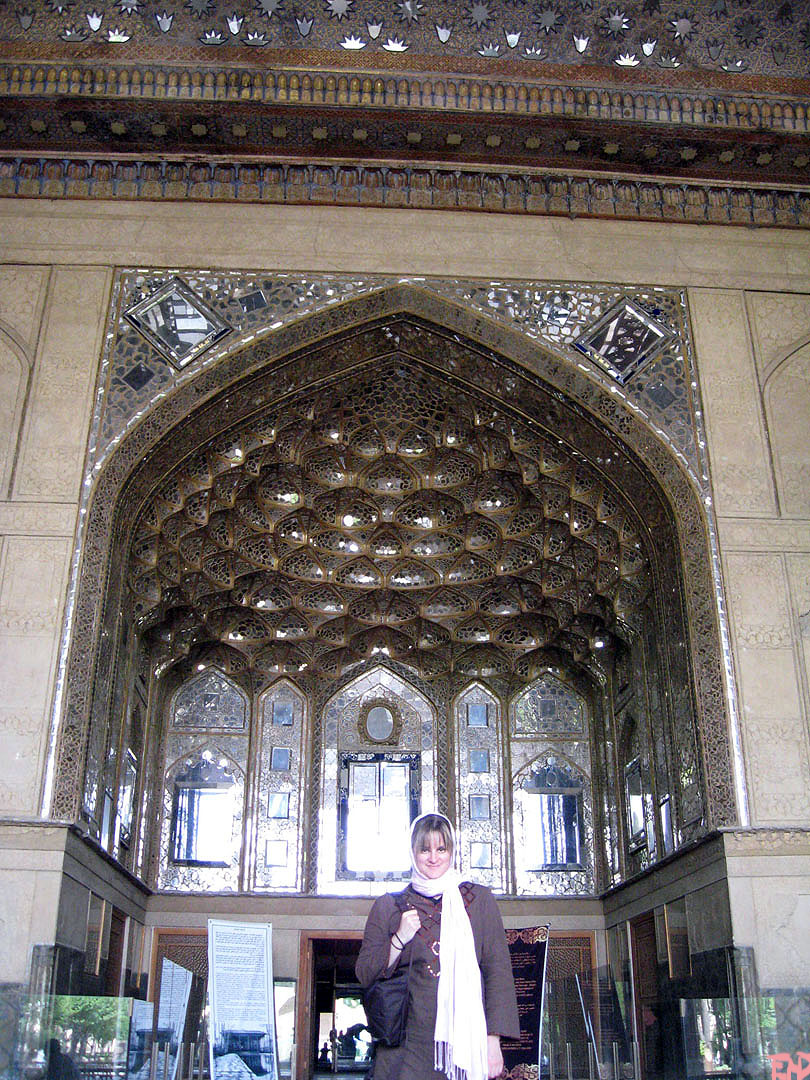
Chehel Sotun Palace in Iran (Photo: Emily O'Dell)
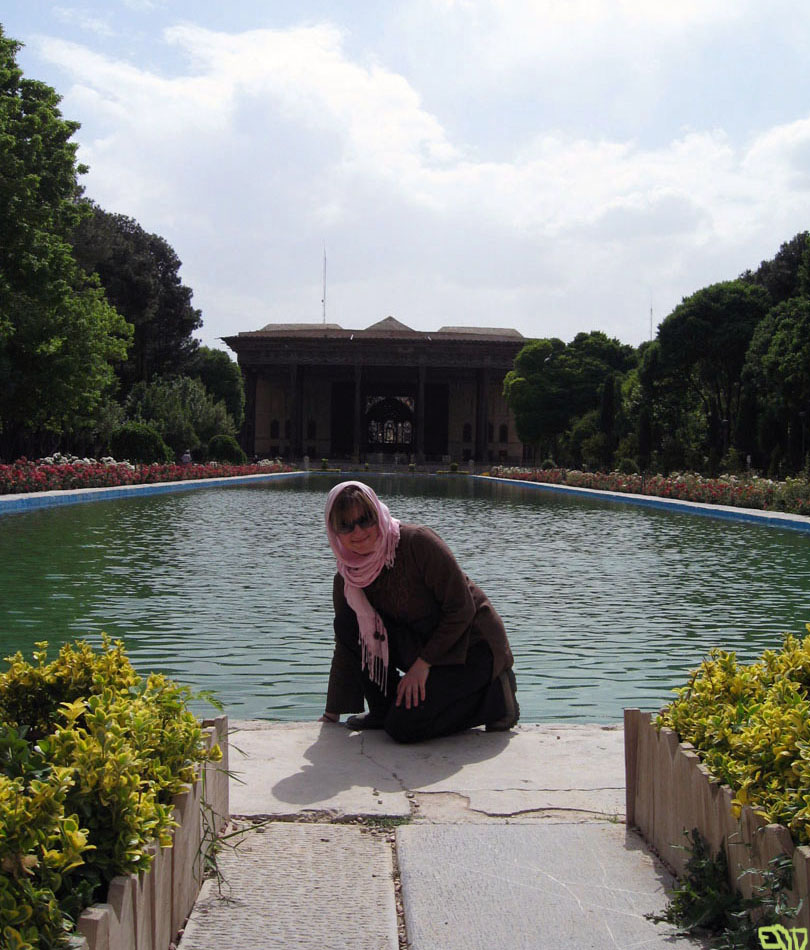
Reflecting Pool (Photo: Emily O'Dell)
Let go of your worries
and be completely clear-hearted,
like the face of a mirror
that contains no images.
— Rumi
I’ve got a thing for palaces in Persia. One of my favorite palaces in Iran is the Chehel Sotun Palace–its name means “Forty Columns.” But if you look closely at the photo below, you won’t be able to spot 40 columns at all–since there’s only 20 holding up this Achaemenid-inspired talar (columnar porch). To see the other 20 appear, you’ll have to look in the palace’s pool (left) to see the columns reflected back.
While these slender, wooden columns are quite a sight to behold, my favorite part of this palace is the mirror mosaics which you can see above. I won’t even try to describe them, since I think their beauty speaks for itself…
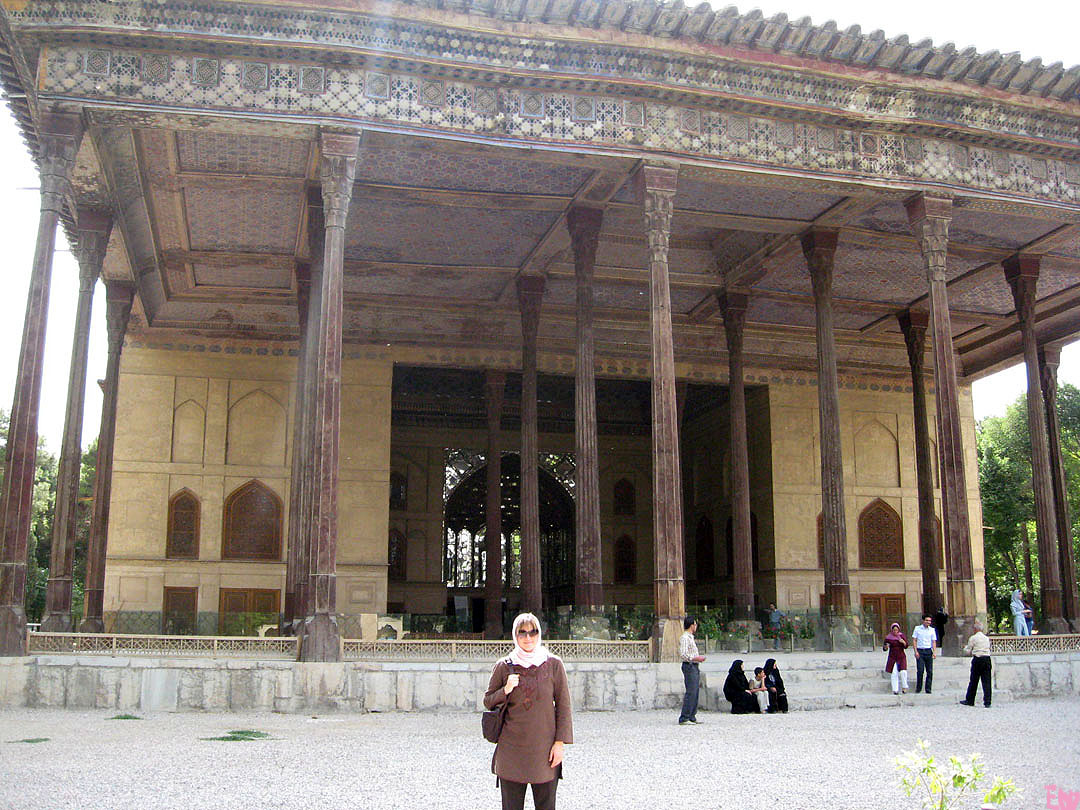
Columns (Photo: Emily O'Dell)
Posted in Blog
Comments Off on Chehel Sotun Palace…
Nur: Light in Art and Science from the Islamic World
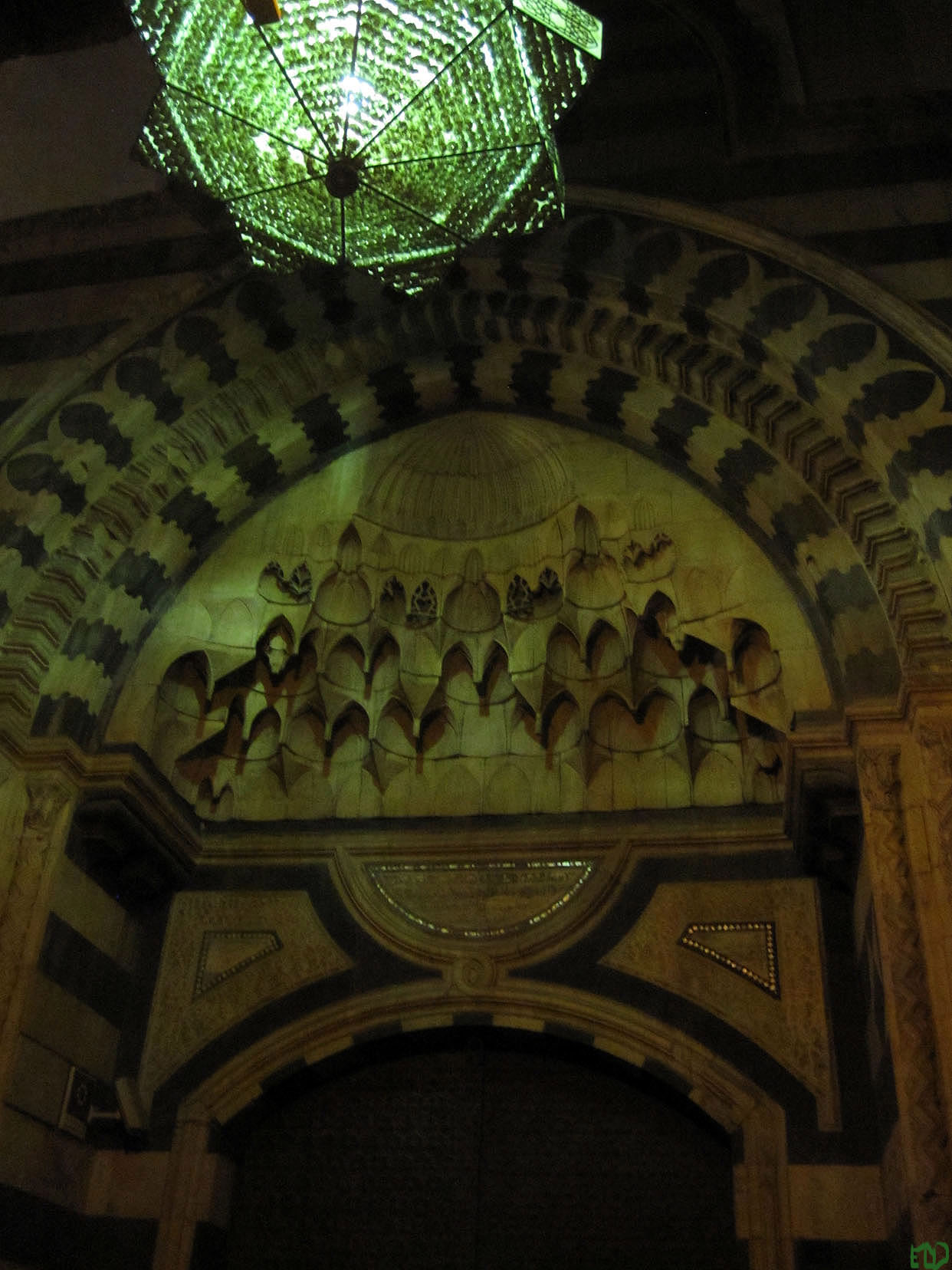
Damascus (Photo: Emily O'Dell)
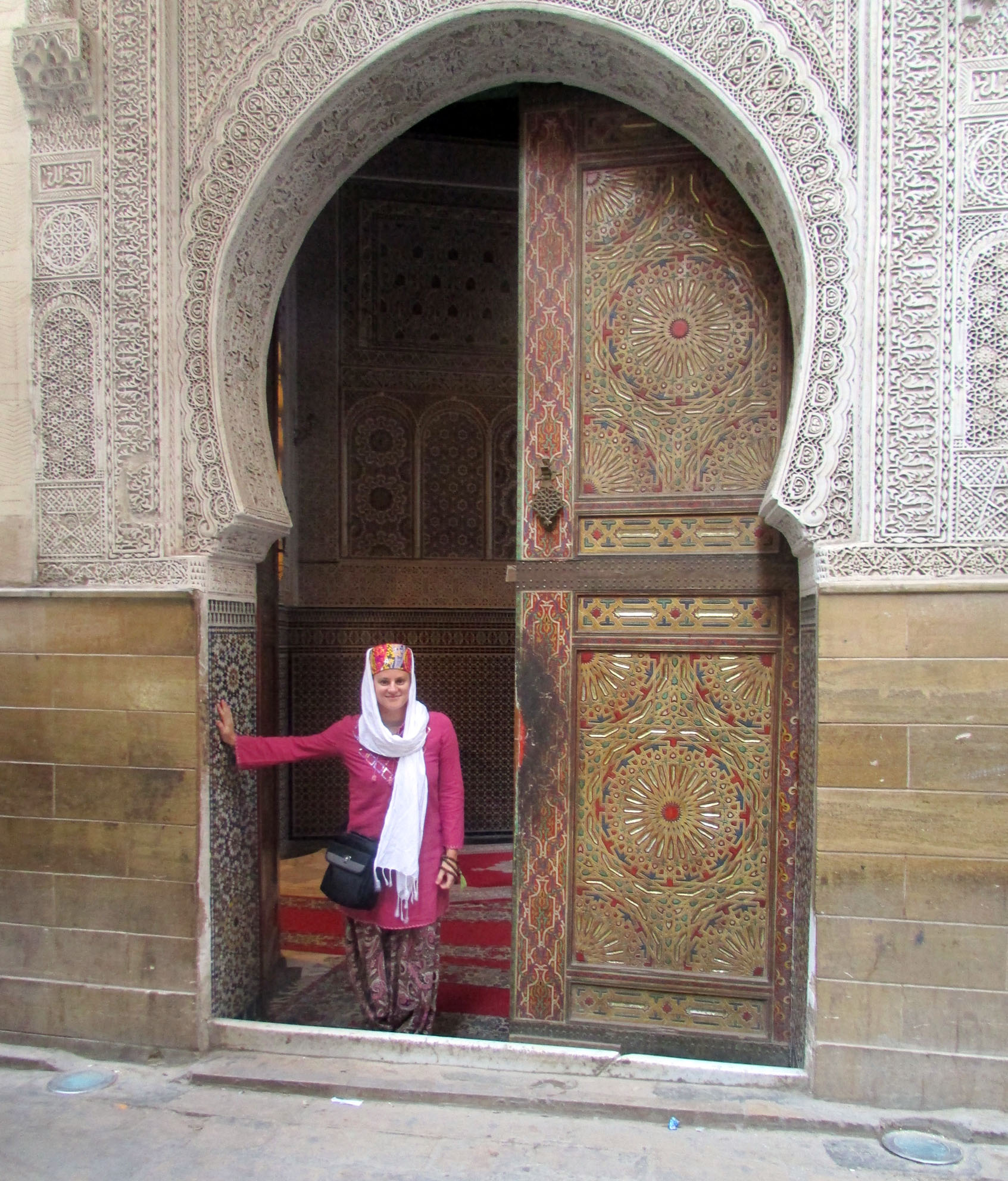
Visiting the shrine of Sheikh Ahmed el-Tijani in Fez (Photo: Emily O'Dell)
I got to understand that Islam makes a clear link with light even when that link is far from apparent. Islam is also very much about the light of knowledge that fights the ignorance of darkness.
— Sabiha Al Khemir (curator)
A new exhibit, “Nur: Light in Art and Science from the Islamic World,” looks at the use of light in Islamic art, philosophy, mysticism, and science. This exhibit at the Fundación Focus-Abengoa, a cultural center in Spain, will run until February 9th.
Of most interest to me is the sacred geometry of a ceiling section from the Sufi shrine of Sidi Ahmed Tijani in the Moroccan city of Fez (where I spent Eid just a few weeks ago) that features a sixteen-pointed star at the center of each panel. As you can see in the picture to the left, even the entrance to his shrine is decorated with ornate carvings and colors…
We’re seeing every day the horror of the war in Syria, so it feels right to show also how much light the Islamic world can bring.
— Sabiha Al Khemir
Posted in Blog
Comments Off on Nur: Light in Art and Science from the Islamic World
Tea in Iran…
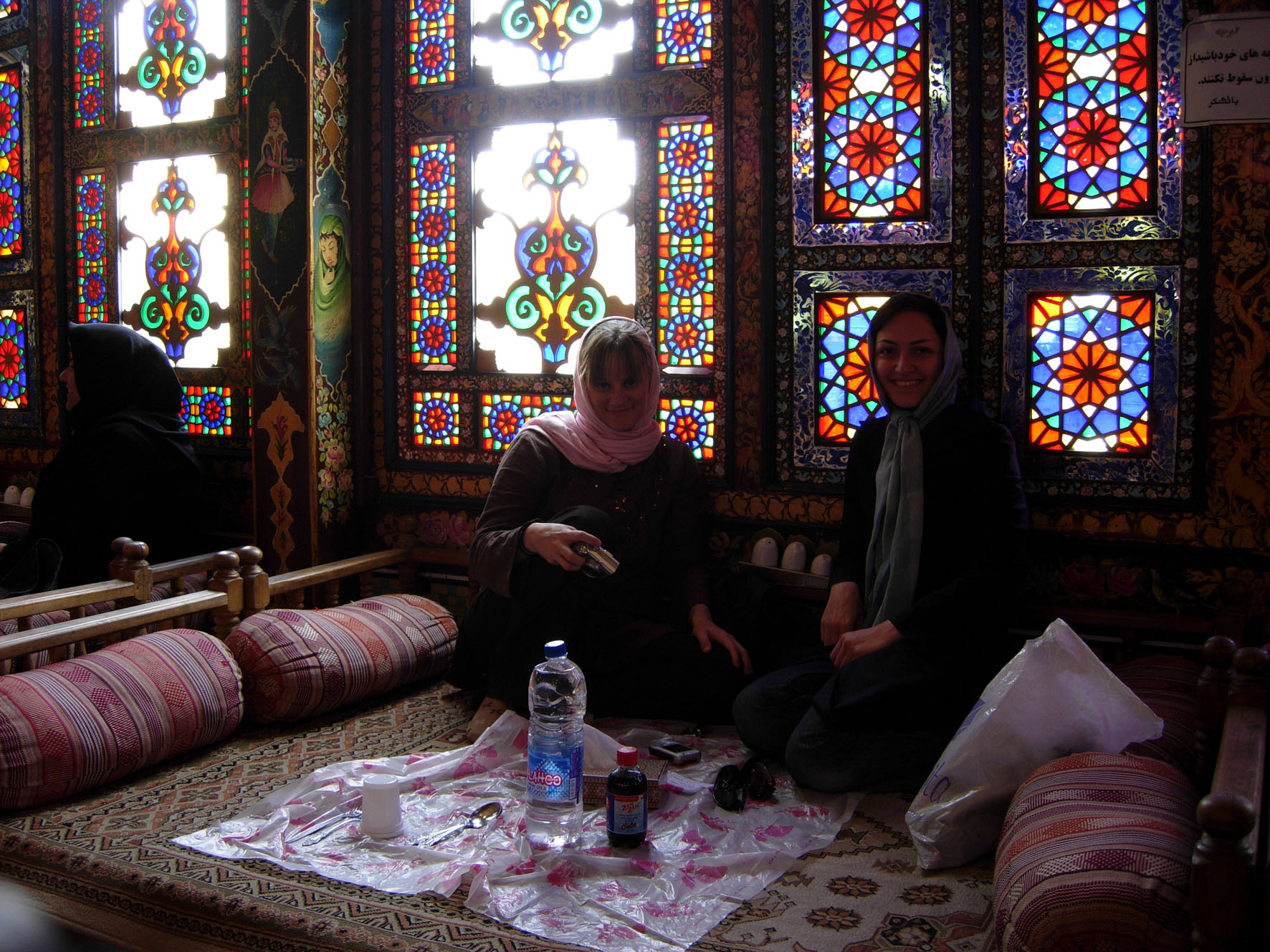
Having tea in Iran (Photo: Emily O'Dell)
I’ve heard it said there’s a window that opens from one mind to another,
but if there’s no wall, there’s no need for fitting the window, or the latch.
— Rumi
With most sources reporting that a nuclear deal with Iran is now in sight, I’ve been thinking about all of my favorite places in Iran–in hopes of returning one day soon. The photo above was taken at one of my favorite teahouses in Iran. After a long day of visiting Sufi shrines, paradisial palaces, and majestic mosques, I found this teahouse the perfect place to lounge on some pillows, drink some tea, and chat in Persian with my Iranian friends…
Posted in Blog
Comments Off on Tea in Iran…
Reading Plato in Beirut…
Whereas, our argument shows that the power and capacity of learning exists in the soul already; and that just as the eye was unable to turn from darkness to light without the whole body, so too the instrument of knowledge can only by the movement of the whole soul be turned from the world of becoming into that of being, and learn by degrees to endure the sight of being, and of the brightest and best of being, or in other words, of the good.
― Plato, The Republic
For the past two weeks in Beirut, my students and I have been trying to climb out of Plato’s proverbial cave to wake up and contemplate some of philosophy’s most fundamental questions. How can we awaken to reality? How do we live an examined life? Why must we help those stuck in the cave–who haven’t seen “the light”? What is justice–and how do we pursue “the good”?
Going along with the notion that the “unexamined life is not worth living,” my students and I have been examining–individually and collectively–our likes, dislikes, beliefs, biases, prejudices, hopes and fears. In our attempt to consider “the good,” we’ve also been analyzing the forms, aims and purposes of political and social justice. To connect the past with the present, we’ve been exploring the direct influence of ancient philosophy on modern-day activists, public intellectuals, and pop-stars.

When we rise to love on the agape level…we rise to the position of loving the person who does the evil deed while hating the deed that the person does.
— MLK (Papers 6:324; 325)
In his sermons and speeches on non-violence, Dr. Martin Luther King continually returned to the ancient Greek concept of agape–love that is “purely spontaneous, unmotivated, groundless, and creative” (Papers 6:325). It was this principle which he said rested at the center of his movement–and he repeatedly distinguished agape from the Greek concepts of eros and philia. His admiration for ancient Greece wasn’t limited to philosophy or linguistics–he even included Greek playwrights in the list of people he wished he could meet.
I would move on by Greece, and take my mind to Mount Olympus. And I would see Plato, Aristotle, Socrates, Euripides and Aristophanes assemble around the Parthenon as they discussed the great and eternal issues of reality. — MLK
About a month ago–when I asked my students here in Beirut to pick three people from history they themselves would like to meet–many of them picked Dr. Martin Luther King. This was long before we started making connections between his principles and the philosophies of the ancient Greeks. Looks like MLK’s spirit is living on…here in Beirut.

But since I was young, I have been shaped by the legacy of Athens, by Socrates’s preoccupation with questioning: the unexamined life is not worth living. That meant much to me as I was growing up on the chocolate side of Sacramento, going to the book mobile, and reading Plato and Kierkegaard for the first time.
— Cornel West
Our study of ancient philosophy and modern-day politics led us to Cornel West–whose own mind was shaped early on by Plato and Socrates. In many of his public talks, Dr. West still calls upon the wisdom of the ancient Greeks to show how their philosophy is still relevant–and needed–today, when tackling some of our most pressing political, economic and social concerns.
From calls for revolution by Russell Brand to the unveiling of the “puppeteer” in the Wizard of Oz, my students and I have been busy analyzing different discourses, artistic narratives, and pop-star pontifications to see how the principles and questions of Plato still reverberate through popular culture today.
None are more hopelessly enslaved than those who believe they are free.
— Goethe
Posted in Blog
Comments Off on Reading Plato in Beirut…
Today in Beirut…
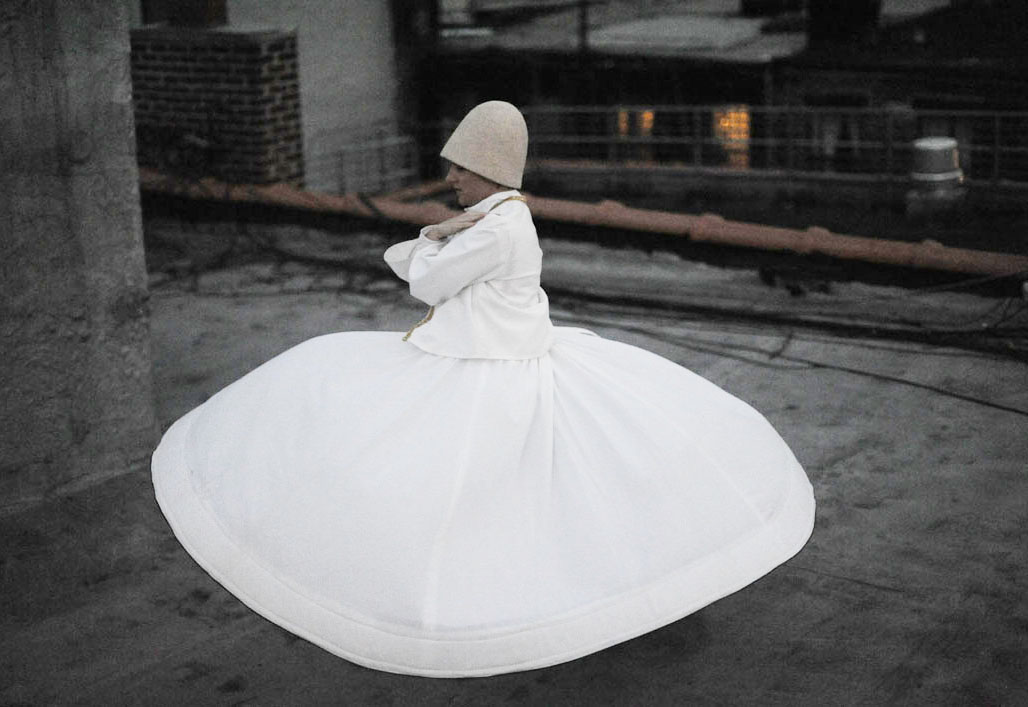
Whirling like a UFO on my roof (Photo: Eddie Chu)
You dance inside my chest where no-one sees you,
but sometimes I do, and that sight becomes this art…
— Rumi
This morning, I started off the day whirling with Sufis in Beirut. After the room stopped spinning, we all sat down to sip some delicious Arabic coffee–and compare notes about our travels throughout the Middle East and Central Asia. It was an assembly of not only whirling dervishes–but wandering dervishes too. Since most of the Sufis there didn’t speak English, I got to practice my Arabic in describing my recent travels through Morocco to visit the country’s Sufi shrines–from Casablanca to Fez.
To whirl into the day feels different than whirling at night. But before I say how, perhaps you might try it yourself–whirling counter-clockwise 5 minutes in the morning, and then 5 minutes at night–to clear the mind. Perhaps you’ll notice the difference too…
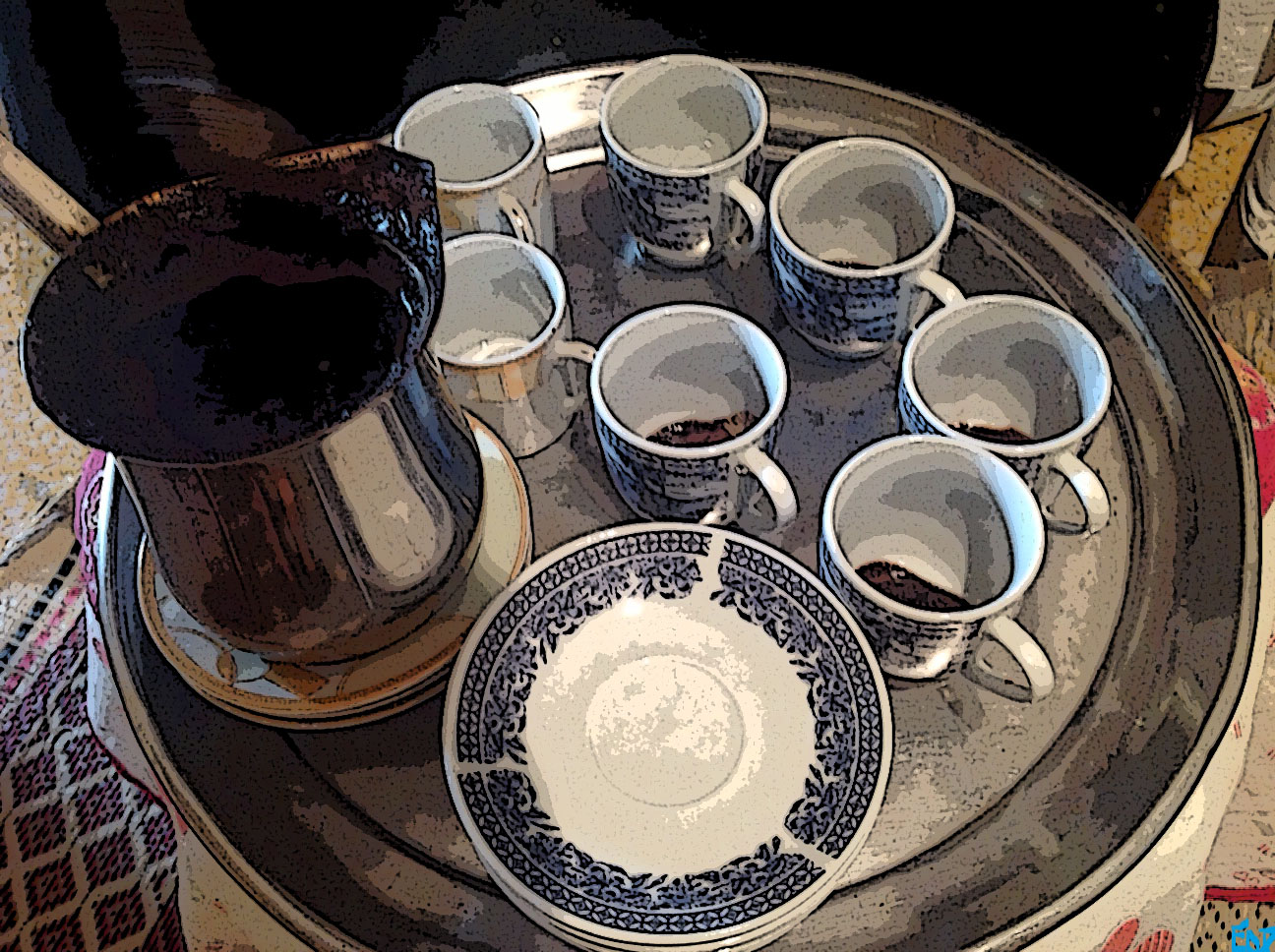
Today's Arabic coffee with Sufis in Beirut (Photo: Emily O'Dell)
Posted in Blog
Comments Off on Today in Beirut…
Mellow Yellow…
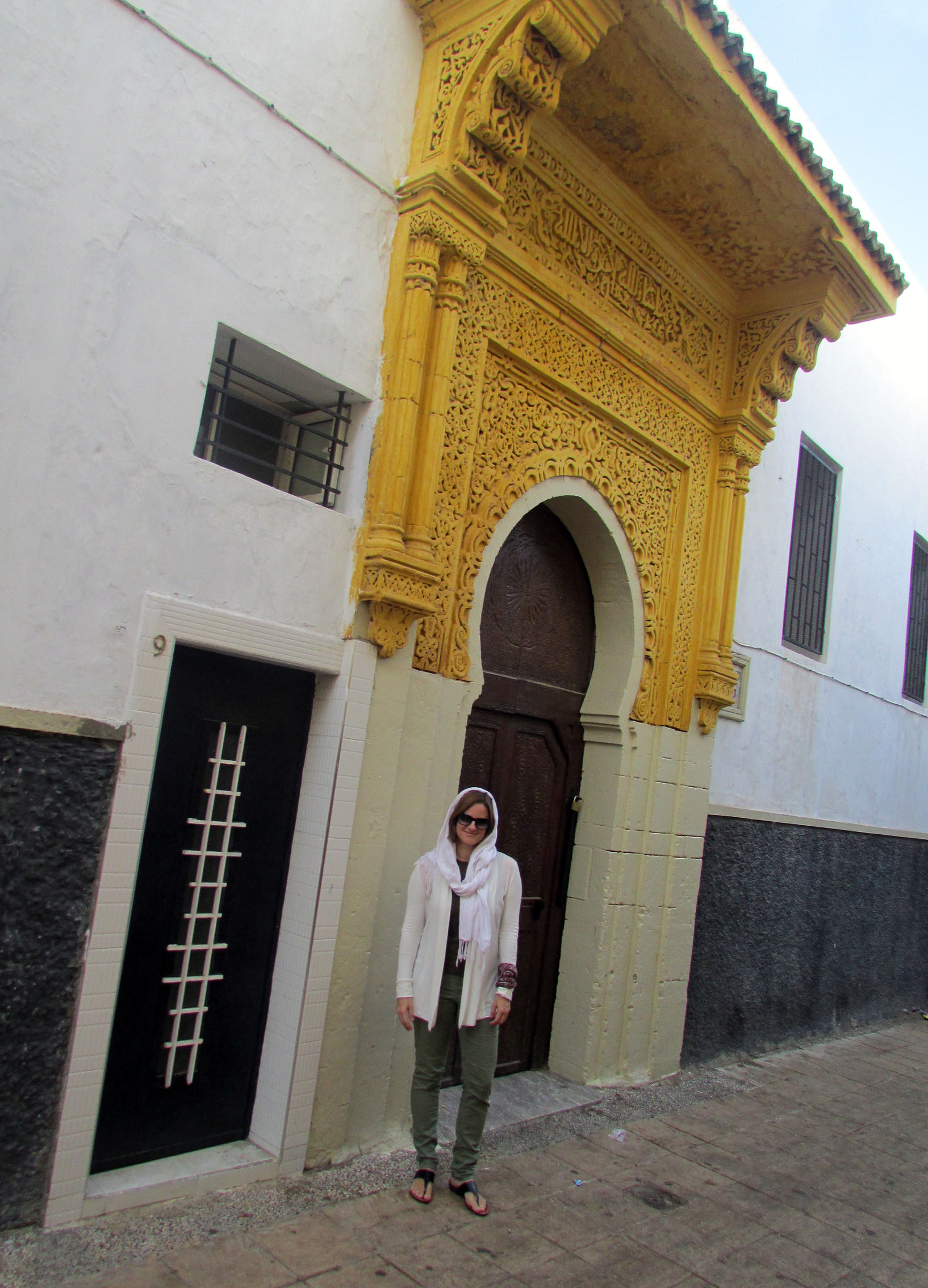
Sufi lodge in Morocco (Photo: Emily O'Dell)
Be with those who help your being.
Don’t sit with indifferent people;
whose breath comes cold out of their mouths.
Not these visible forms, your work is deeper…
Leaves get yellow.
The tree puts out fresh roots and makes them green.
Why are you so content with a love that turns you yellow?
— Rumi
While traveling through Morocco a few weeks ago, I was drawn–from a distance–to this Sufi lodge of the Tijani Sufi Order by its bright yellow color–and the Arabic inscribed high above the door…
Posted in Blog
Comments Off on Mellow Yellow…